Tuesday, April 15, 2008

Rector's Forum

Photobucket
The Rector held a forum last Sunday on the recent House of Bishops meeting and the attempted depositions of Bishops Schofield and Cox. You can listen to the audio here.

Below are some relevant background materials: the applicable canons and articles including Conger's Living Church article first noting the irregularity. Also, some parishioners asked about resources to stay informed. Please take note of the "Church News and Comment" links near the top of the right hand column on this blog.

TITLE IV, CANON 9: Of Abandonment of the Communion of This Church by a Bishop

Sec. 1. If a Bishop abandons the communion of this Church (i) by an open renunciation of the Doctrine, Discipline, or Worship of this Church, or (ii) by formal admission into any religious body not in communion with the same, or (iii) by exercising episcopal acts in and for a religious body other than this Church or another Church in communion with this Church, so as to extend to such body Holy Orders as this Church holds them, or to administer on behalf of such religious body Confirmation without the express consent and commission of the proper authority in this Church; it shall be the duty of the Review Committee, by a majority vote of All the Members, to certify the fact to the Presiding Bishop and with the certificate to send a statement of the acts or declarations which show such abandonment, which certificate and statement shall be recorded by the Presiding Bishop. The Presiding Bishop, with the consent of the three senior Bishops having jurisdiction in this Church, shall then inhibit the said Bishop until such time as the House of Bishops shall investigate the matter and act thereon. During the period of Inhibition, the Bishop shall not perform any episcopal, ministerial or canonical acts, except as relate to the administration of the temporal affairs of the Diocese of which the Bishop holds jurisdiction or in which the Bishop is then serving.

Sec. 2. The Presiding Bishop, or the presiding officer, shall forthwith give notice to the Bishop of the certification and Inhibition. Unless the inhibited Bishop, within two months, makes declaration by a written statement to the Presiding Bishop, that the facts alleged in the certificate are false or utilizes the provisions of Canon IV.8 or Canon III.12.7, as applicable, the Bishop will be liable to Deposition. If the Presiding Bishop is reasonably satisfied that the statement constitutes (i) a good faith retraction of the declarations or acts relied upon in the certification to the Presiding Bishop or (ii) a good faith denial that the Bishop made the declarations or committed the acts relied upon in the certificate, the Presiding Bishop, with the advice and consent of a majority of the three senior Bishops consenting to Inhibition, terminate the Inhibition. Otherwise, it shall be the duty of the Presiding Bishop to present the matter to the House of Bishops at the next regular or special meeting of the House. If the House, by a majority of the whole number of Bishops entitled to vote, shall give its consent, the Presiding Bishop shall depose the Bishop from the Ministry, and pronounce and record in the presence of two or more Bishops that the Bishop has been so deposed.

Photobucket

Deposition Votes Failed to Achieve Canonically Required Majority
March 15, 2008, by George Conger

Slightly more than one-third of all bishops eligible voted to depose bishops John-David Schofield and William J. Cox during the House of Bishops’ spring retreat, far fewer than the 51 percent required by the canons.

The exact number is impossible to know, because both resolutions were approved by voice vote. Only 131 bishops registered for the meeting March 7-12 at Camp Allen, and at least 15 of them left before the business session began on Wednesday. There were 294 members of the House of Bishops entitled to vote on March 12.

When questioned about canonical inconsistencies during a telephone press conference at the conclusion of the meeting, Bishop Michael Curry of North Carolina said the bishops had relied on advice provided to them by canonical experts, and did not examine canonical procedure during plenary debate prior to the votes to depose bishops Schofield and Cox.

Bishop Schofield was consecrated Bishop of San Joaquin in 1989. Last December, he presided over a diocesan convention at which clergy and lay delegates voted overwhelmingly to leave The Episcopal Church and affiliate with the Anglican Church of the Southern Cone. Bishop Cox was consecrated Bishop Suffragan of Maryland in 1972. He resigned in 1980, later serving as Assisting Bishop of Oklahoma from 1980 to 1988. In 2005, Bishop Cox ordained two priests and a deacon at Christ Church, Overland Park, Kan. Christ Church affiliated with the Anglican Church of Uganda after purchasing its property from the Diocese of Kansas.

Both bishops were charged with abandonment of communion. The procedure for deposing a bishop under this charge is specified in Title IV, canon 9, sections 1-2. The canon stipulates that the vote requires “a majority of the whole number of bishops entitled to vote,” not merely a majority of those present. At least a dozen bishops voted either not to depose Bishop Schofield or to abstain, according to several bishops. The number voting in favor of deposing Bishop Cox was reportedly slightly larger than the number in favor of deposing Bishop Schofield.

Presiding Bishop Katharine Jefferts Schori was questioned about the history of the canonical proceedings against Bishop Cox. At first she said during the press conference that she had not sought the canonically required consent of the three senior bishops of the church for permission to inhibit Bishop Cox pending his trial. However Title IV, Canon 9, sections 1-2 do not describe a procedure for deposing a bishop who has not first been inhibited.

Consent Never Sought

Later in the press conference, Bishop Jefferts Schori clarified and extended her remarks, saying she had been “unable to get the consent of the three senior bishops last spring. That’s why we didn’t bring it to the September meeting” of the House of Bishops. One of the three senior bishops with jurisdiction confirmed to The Living Church that his consent to inhibit Bishop Cox was never sought.

In 2007, Bishop Cox sent a written letter to Bishop Jefferts Schori, announcing his resignation from the House of Bishops. Since he was already retired, he did not have jurisdiction, and therefore unlike Bishop Schofield, his resignation did not require consent from a majority of the House of Bishops. A trial of the 88-year-old retired bishop was not mandatory.

Bishop Cox also does not appear to have been granted due process with respect to a speedy trial. Once the disciplinary review committee formally certifies that a bishop has abandoned communion, the canons state “it shall be the duty of the Presiding Bishop to present the matter to the House of Bishops at the next regular or special meeting of the house.” The review committee provided certification to Bishop Jefferts Schori on May 29, 2007. His case should have been heard during the fall meeting in New Orleans last September. When asked about the apparent inconsistency, Bishop Jefferts Schori said initially she did not include Bishop Cox’s case on the agenda for the New Orleans meeting “due to the press of business.”

Title IV, canon 9, section 1 requires the Presiding Bishop to inform the accused bishop “forthwith,” in other words immediately, after the review committee has provided a certificate of abandonment, but Bishop Jefferts Schori did not write to Bishop Cox until Jan. 8, 2008, more than seven months afterward.

The two-hour business session at which the deposition votes were taken ran slightly longer than originally scheduled. First a resolution was read followed by prayer from the chaplain. A period of silence followed the prayer. After the silence was broken, the bishops discussed the resolution in small table groups followed by plenary discussion. When it appeared that everyone who wanted to speak had done so, the voice vote was taken. Each resolution was read and voted on separately.


Call for review after trial ‘flouted Church rules’
March 27, 2008, by George Conger

US Presiding Bishop Katharine Jefferts Schori failed to follow the procedural rules governing the trial of Bishop William Cox for “abandonment of the Communion” of the Episcopal Church an investigation by The Church of England Newspaper has found.

In a March 12 press conference, Bishop Schori stated she had not followed rules governing the requirement that the 88-year old retired bishop be granted a speedy trial, that he be informed of the charges against him in a timely fashion, and that the consent of the church’s senior bishops be solicited by the Presiding Bishop to suspend him from office pending trial. A subsequent investigation by CEN in conjunction with The Living Church magazine revealed an insufficient number of votes to convict were cast also.

The Bishop of Central Florida has called for a review of the proceedings, and the president of the church’s appellate court of review for the trial of bishops is understood to have agreed to look into the proceedings.

Elected suffragan bishop of Maryland in 1972, Bishop Cox was translated to Oklahoma in 1980 as assistant bishop and retired in 1988. In June 2005, Bishop Cox performed ordinations at Christ Church, Overland Park, Kansas on behalf of Archbishop Henry Orombi of Uganda. Earlier that year Christ Church negotiated an amicable parting of the ways with the diocese of Kansas and had joined the Ugandan Church. Bishop Cox returned the following month to Overland Park to perform confirmations on behalf of Archbishop Orombi.

The bishops of Kansas and Oklahoma filed a complaint against Bishop Cox for performing Episcopal acts without the permission of the local diocesan bishop. In March 2006 the Church’s Title IV review committee found there was sufficient evidence to bring Bishop Cox to trial, however, Presiding Bishop Frank Griswold declined to prosecute.

Following the 2006 election of Bishop Katharine Jefferts Schori as Presiding Bishop the charges were resubmitted. Bishop Cox, then 87 years of age, declined to contest the matter telling his attorney he was too old to fight, and by letter resigned his membership in the House of Bishops on March 28, 2007.

In his letter of resignation Bishop Cox said that although he was resigning his membership in the House of Bishops and was not resigning his orders and would be joining the Province of the Southern Cone and would continue his episcopal ministry in that branch of the Communion.

Bishop Schori forwarded the letter to the Title IV review committee asking it to determine whether by this letter, Bishop Cox had “abandoned the communion” of the Episcopal Church.

On May 29, 2007 the Title IV review committee issued its certificate and report under Title IV Canon 9 that Bishop Cox had “abandoned the communion.” On Jan 8, 2008 she informed Bishop Cox that he had been determined to have abandoned the communion of this church. She gave him 60 days to recant, or else he would be brought before the next house of bishops meeting and be deposed. Offering no defence, Bishop Cox was deposed on a voice vote of bishops attending the final day of the meeting.

The procedures laid out in Title IV, Canon 9, sections 1 and 2 (the abandonment canon) to depose a bishop state that after the Title IV review committee issues a certificate of abandonment the Presiding Bishop “shall” “forthwith” notify the accused. The Presiding Bishop then “shall” seek the consent of the three senior bishops with jurisdiction to inhibit the accused bishop, and trial “shall” take place at the “next” meeting of the House of Bishops.

At a March 12 press conference Bishop Schori outlined the procedural history surrounding the Cox case. She said the Title IV review committee had “certified [Bishop Cox] several years ago. … before her time.” She added, however, that “it was never brought to the House of Bishops for action.”

She then said she “did not send it to the three senior bishops” and the House of Bishops “did not consider it in September” at their meeting in New Orleans with the Archbishop of Canterbury due to the “the press of other business.”

Several minutes later, Bishop Schori said she wanted to “clarify” her earlier statements. She said she had been “unable to get the consent of the three senior bishops last spring. That’s why we didn’t bring it to the September meeting” of the House of Bishops.

Contacted after the press conference, one of the three senior bishops, who declined to be named, stated he had never been asked by Bishop Schori to consent to Bishop Cox’s supension.

The Presiding Bishop’s Chancellor, Mr. David Booth Beers, declined to address the issues surrounding Bishop Cox’s case in a March 15 statement released through the Episcopal Church’s press office. However, he stated that his “position” was that there had been a legal quorum to depose the two bishops on March 12.

Canon lawyer, retired Bishop William Wantland of Eau Claire told CEN the deposition of Bishop Cox was “void” for failing to achieve the required “majority vote of all bishops entitled to vote” and because the “canonical procedure was simply not followed.”

In defence of the proceedings against Bishop Cox, Indianapolis Bishop Catherine Waynick wrote that while the “canons may need to be clarified, what does not seem to need clarifying” was that “William Cox willfully violated the canons by functioning where he had been specifically asked not to.”

However, the charge brought against Bishop Cox was not violating diocesan boundaries. In 2006 Bishop Griswold dropped the charges proffered against Bishop Cox for the Kansas ordination, raising the question whether the bishops convicted him of a crime not before the bishops for adjudication.

The charge was “Abandonment of Communion,” Bishop Wantland said. The punishment for violation of diocesan boundaries “is a totally different charge. In my opinion, this is what he should have been charged with, and the procedure under Canon IV. 9. 2 was totally inappropriate and without any justification,” he said.

On March 15, Central Florida Bishop John W. Howe urged the Episcopal Church’s three senior bishops to review the case, saying he was under “no illusions that the outcome of the despicable vote to depose John-David [Schofield] and William [Cox] will be reversed, but at least we might want to obey the canons.”

On Maundy Thursday, Bishop Howe repeated his call for justice to those falsely condemned, noting “I recall that another person of influence washed his hands of a difficult matter on this same weekend some years ago.”


Bishops demand to know litigation costs
March 31, 2008, by George Conger

Two retired American bishops have called upon the national church in New York to disclose the amount of money the Episcopal Church is spending on litigation with breakaway congregations.

The call for financial accountability from retired Bishops Williams Wantland of Eau Claire, Wisconsin and Bishop Maurice Benitez of Texas comes amidst tightening finances for the Episcopal Church, which has also announced it would no longer pay the stipends of overseas missionaries.

On March 7, the Episcopal Church’s mission personnel officer announced that missionaries sponsored by the national church would no longer receive stipends or reimbursement for travel expenses.

Lay missionaries would now receive the same pension benefits as ordained missionaries. However, this rise in costs plus increased health and conference fees coupled with a “reduction in our overall budget of 5 percent in 2008 due to budget constraints” had forced the church to cut off missionary stipends.

The cuts will take immediate effect for new missionaries, while those on current assignment will see the change when their “Letters of Understanding” are renewed.

The suspension of the stipendiary missionary programme follows a Feb 29 open letter from the two retired bishops seeking an accounting for the estimated several million dollars spent on litigation by the national church offices. The two bishops wrote their latest request was their third attempt to get an answer.

The first answer the bishops received, they said, was that the money spent on lawyers to fight the church’s property battles was “a secret.” A second request elicited the response that “no funds for litigation have come from either the Pension Fund or Trust Funds. However, [the national church] refused to disclose the amounts being expended on litigation.”

In their Feb 29 letter, the bishops stated the national church had no legal right to withhold financial information. Saying “it’s a secret” was “not acceptable. If there is nothing wrong with these expenditures, then why do you refuse to reveal the amount?” Bishops Wantland and Benitez asked.


Presiding Bishop charged with defaming Bishop Cox
April 2, 2008, by George Conger

Lawyers for the octogenarian bishop deposed by the American Church have written to Presiding Bishop Katharine Jefferts Schori charging her with defaming their client.

Questions over the legality of the March 12 proceedings have riled the American Church since the legality of the decision to depose Bishop John-David Schofield of San Joaquin and retired Bishop William Cox was questioned by The Church of England Newspaper and the Living Church.

On March 27 the Diocese of South Carolina issued a formal protest to the “failure to follow the Canons” and asked Bishop Schori to “revisit those decisions”, “refrain” from appointing a new bishop for San Joaquin and to “make every effort to follow our Church Canons in all future House of Bishops decisions.”

“Because we feel so strongly that the Canons were not followed in the depositions of Bishops Schofield and Cox, we must respectfully refuse to recognize the depositions, and we will not recognize any new bishop who may be elected to replace Bishop Schofield, unless and until the canons are followed,” South Carolina said.

The Bishop of Central Florida last week called for a review of the decision, raising the matter with Bishop Clifton Daniels III of East Carolina, the president of the church’s court of review for the trial of a bishop. Though Bishop Daniels declined to respond to a query from the CEN, he is understood to have agreed to look into the matter.

R. Wicks Stephens, the chancellor of the Anglican Communion Network and attorney for Bishop Cox wrote to Bishop Schori and her lawyer David Booth Beers on March 27 stating “your purported deposition of Bishop Cox is unsupported by the canonically required consent of a majority of the whole number of Bishops entitled to vote on the proposed deposition of Bishop Cox which was presented to the House of Bishops at its last meeting. Accordingly, the deposition of Bishop Cox was not consented to as required, and your pronouncement of his deposition as a Bishop is without effect and void.”

He lambasted Mr. Beers’ argument that his “reading” of the canons required “merely the consent of a majority of those Bishops present in the House” to depose the two bishops, citing the text of the constitution and canons to support this reading.

“While assuredly your Chancellor has the right to offer interpretations of the canons when ambiguity so requires, nothing justifies a reading” of the canons “that is directly contrary to that canon’s plain language and meaning,” Mr. Stephens said, demanding that “you right the wrong by which you have defamed Bishop Cox by immediately withdrawing your pronouncement of deposition.”


Letter to the San Joaquin Standing Committee
The following is the letter sent to the elected members of the Standing Committee of San Joaquin, but without the addresses of each member (which were amazingly included in the original as posted to Episcopal News Service).

January 25, 2008

The Very Rev. Canon James L. Snell
The Rev. Richard I. James
Ms. Kim Robinson
Mr. Ted Yumoto
The Rev. Michael E. McClenaghan
The Rev. Robert G. Eaton
Mr. Tom Wright
Mr. Stevie Oates

Dear Sirs and Madam,

I am writing to you because I have been informed that you constituted the Standing Committee of the Episcopal Diocese of San Joaquin prior to and/or during the most recent Convention of the Diocese in December 2007. It has come to my attention that in the past several months you have taken actions in support of an attempt to take the Episcopal Diocese of San Joaquin out of the Episcopal Church and into affiliation with the Province of the Southern Cone. I understand that these have included voting to amend the Diocese’s Constitution and canons and attempting to organize as the Standing Committee of an entity that identifies itself as an Anglican Diocese of the Province of the Southern Cone. These actions directly conflict with the Constitution and canons of the Episcopal Church.

Canon I.17.8 of the Episcopal Church provides that “[a]ny person accepting any office in this Church shall well and faithfully perform the duties of that office in accordance with the Constitution and Canons of this Church and of the Diocese in which the office is being exercised.” In the light of your recent actions, I find that you have been and are unable to well and faithfully fulfill your duties as members of the Standing Committee of the Episcopal Diocese of San Joaquin under Canon I.17.8. Accordingly, with this letter I inform you that I do not recognize you as the Standing Committee of the Episcopal Diocese of San Joaquin.

I regret the decisions that you have made to attempt to take the Diocese out of The Episcopal Church and the necessary consequences of these actions. I want you to be fully aware that a future declaration of adherence to the Constitution and Canons of The Episcopal Church, and, for clergy, a reaffirmation of the Declaration of Conformity, will once again make you eligible for election to office in the Episcopal Diocese of San Joaquin. I give thanks for your service in the past, and pray that it may once again be a blessing to this Diocese.

I remain

Your servant in Christ,
Katharine Jefferts Schori


Letter from San Joaquin Standing Committee

The Most Rev. Katharine Jefferts Schori
Office of the Presiding Bishop
The Episcopal Church Center
New York City, New York
pboffice@episcopalchurch.org

Friday, February 01, 2008

We have received your letter dated January 25 in which you state that you do not recognize us individually as members of the Standing Committee of the Diocese of San Joaquin. We find your statements, published by ENS on the internet and read in Hanford prior to most of us receiving the actual letter, to be unhelpful. While you may hold any personal opinion you wish as an individual, the office of Presiding Bishop does not have the legal, canonical or moral authority to proclaim for the Episcopal Church non-recognition of duly elected members of a diocesan Standing Committee. Without having any canonical or constitutional authority to refuse to recognize us, we cannot accept your opinion as changing our status as the canonical Standing Committee of the Diocese.

We regret that you have based your “understanding” on conjecture and misinformation. Since you do not provide any evidence of specific acts of the Standing Committee, nor proof of any wrong doing, we are unable to comment in detail on acts or events you may have relied upon to form your “understanding”. We regret you didn’t attempt to confirm your understanding with the President of our Standing Committee when you called him on January 9th, or on any other occasion.

You cite Canon I.17.8 as setting a standard of duty for anyone in elected position in The Episcopal Church, however neither this canon nor any other canon gives the office of Presiding Bishop [or any other person] sole privilege to interpret what constitutes a failure to “well and faithfully perform the duties” of any office. If the interpretation of failure to “well and faithfully perform the duties” of office is open to anyone, a cursory look at your performance in office would be cause for a great number of Episcopalians to find that you “have been and are unable to well and faithfully fulfill your duties as” Presiding Bishop. To name just a few of your canonical violations:

* Ordination of the Bishop of Virginia without the specific written consents from a majority of Standing Committees as required in Canon III.11.4.b;
* Your intentional withholding [from May ’07 to January ‘08] of notification and failure to bring before the House of Bishop’s meeting in September 2007 the abandonment of communion finding of the Title IV review committee against Bishop Cox as required in Canon IV.9.2;
* Your stated intent to delay consideration of the abandonment of communion finding of the Title IV review committee against Bishop Duncan past the March 2008 meeting of the House of Bishop’s [including your intentional withholding of notification from December 16, ’07 to January 15, ‘08] again in violation of the requirements of Canon IV.9.2.
* Establishing a missionary congregation in Bakersfield and appointing a priest who is not canonically resident to be under the supervision of Canon Moore and under your authority in violation of Canon I.13.2b and Canon III.9.6

With this evidence of your willful disobedience to the requirements of Canon, many Episcopalians could, using your own words, state they “do not recognize you as” the Presiding Bishop of the Episcopal Church. And of course, in the spirit of reconciliation, we would encourage you to be aware a “future declaration of adherence to the Constitution and Canons of The Episcopal Church and a reaffirmation of the Declaration of Conformity, will once again make you eligible for election to office in the Episcopal Church.”

We regret the decisions you have made to misuse the Canons of The Episcopal Church. We acknowledge your personal opinion of our status as members of the Standing Committee for the Diocese of San Joaquin. In accordance with the Constitution and Canons of the Episcopal Church, we ARE the Ecclesiastical Authority of the Diocese of San Joaquin in the event the House of Bishops should choose to depose Bishop John-David Schofield. Any attempt on your part, or on the part of any other person, to circumvent or replace the Standing Committee as the Ecclesiastical Authority will be a violation of the Constitution and Canons of the Episcopal Church.

J. Snell
M. McClenaghan
R. Eaton
K. Robinson
T. Wright
R. James


San Joaquin now has three dioceses
April 3, 2008, by George Conger

US Presiding Bishop Katharine Jefferts Schori has overseen the creation of a new Diocese of San Joaquin—one of three ecclesial entities bearing that name and active in Central California.

At a special convention called by the Presiding Bishop held on March 28-29, a rump group of the diocese unanimously elected the former Bishop of Northern California, the Rt. Rev. Jerry Lamb to serve as interim bishop of the diocese, and repudiated the December vote to affiliate with the Province of the Southern Cone.

Delegates from 18 congregations met from March 28-29 at St. John the Baptist Church in Lodi, California. However, no delegates from a majority of diocese’s congregations were present at the meeting, nor were more than a quarter of the eligible clergy present.

Delegates to the convention were required to take an oath of conformity before being seated. Of the 18 congregations present, five were parishes of the Diocese of San Joaquin, three were aided missions, and the rest groups representing minorities in parishes that had voted to quit the Episcopal Church.

Clergy and lay delegates from one parish, St. John’s in Tulare objected to the legality of the convention, while its rector protested the Presiding Bishop’s usurpation of the authority of the standing committee in calling a convention, noting she had no right under canon law to proceed.

Critics of the meeting noted the special convention’s actions were of dubious legality, as a quorum of clergy and congregations were not present, and the requirement that 30 days notice of the convening of synod was ignored by the Presiding Bishop. However, delegates passed a resolution absolving itself of any canonical irregularities in the calling and convening of the meeting.

In a question and answer session, Bishop Lamb said the new Diocese of San Joaquin would move forward with the ordination of women, noting that it had received three women priests at the March 29 meeting—San Joaquin had been one of three US dioceses that would not license women priests. However, it would not move as quickly in other disputed areas. “I think the diocese needs to spend time in conversation before it decides where gay and lesbian people will be in this diocese in the future,” Bishop Lamb said.

The formation of an ecclesial body swearing its fealty to the Presiding Bishop in San Joaquin creates a third Diocese of San Joaquin, critics note. In addition to the new diocese, the Anglican Diocese of San Joaquin under the Province of the Southern Cone is extant, as is the Episcopal Diocese of San Joaquin under the ecclesiastical authority of its Standing Committee.

The failure of the House of Bishops to properly depose Bishop Schofield further complicates affairs. Bishop Schori declined to discuss her legal strategy, but noted the new diocese would act quickly to attempt to gain control of the property of all of the Dioceses of San Joaquin.

Thursday, April 10, 2008

What's in a name?

I was thinking the other day about church names. Given our period of discernment in the Diocese of Fort Worth, every now and then someone asks "Will we have to start saying 'St Alban's Anglican Church?'" Of course, the answer is "No," although there would be nothing wrong with doing so, nor with simply saying "St Alban's Church" or "The Church of St Alban the Martyr."

That made me think about the names of the national provinces of the Anglican Communion. Do most use the word "Episcopal" or "Anglican"? There is one (Brazil) that uses both, and some have changed over time. For example, the Church of the Province of Southern Africa was renamed the Anglican Church of Southern Africa two years ago. I was mostly surprised to find that the largest number use neither word in their official name. Here is the list:

None (17)
* The Church of England
* The Church of Nigeria
* The Church of the Province of the Indian Ocean
* The Church of Ireland
* The Church of Bangladesh
* The Church of the Province of Central Africa
* The Church of the Province of Melanesia
* The Church of the Province of Myanmar
* The Church of North India
* The Church of Pakistan
* The Church of the Province of Rwanda
* The Church of the Province of South East Asia
* The Church of South India
* The Church of Uganda
* The Church in Wales
* The Church of the Province of West Africa
* The Church in the Province of the West Indies

"Anglican" (14)
* The Anglican Church in Aotearoa, New Zealand, and Polynesia
* The Anglican Church of Australia
* The Igreja Episcopal Anglicana do Brasil
* The Anglican Church of Burundi
* The Anglican Church of Canada
* The Iglesia Anglicana de la Region Central America
* The Province de L'Eglise Anglicane Du Congo
* The Anglican Church of Kenya
* The Anglican Church of Korea
* The Anglican Church of Mexico
* The Anglican Church of Papua New Guinea
* The Anglican Church of Southern Africa
* Iglesia Anglicana del Cono Sur de las Americas
* The Anglican Church of Tanzania

"Episcopal" (6)
* The Igreja Episcopal Anglicana do Brasil
* The Episcopal Church in Jerusalem and the Middle East
* The Episcopal Church in the Philippines
* The Scottish Episcopal Church
* The Episcopal Church of the Sudan
* The Protestant Episcopal Church in the United States of America

"Catholic" (2)
Hong Kong Sheng Kung Hui (Chinese Catholic Church)
The Nippon Sei Ko Kai (Japanese Holy Catholic Church)

In addition, there are six extra-provincial regional churches. All of them except Cuba are under the metropolitical authority of the Archbishop of Canterbury.

* The Anglican Church of Bermuda
* Iglesia Episcopal de Cuba
* The Parish of the Falkland Islands
* The Lusitanian Catholic Apostolic Evangelical Church of Portugal
* The Spanish Reformed Episcopal Church
* The Church of Ceylon (Sri Lanka)

If we include these churches, the final totals are: None (19), "Anglican" (15), "Episcopal" (8), and "Catholic" (3).

Wednesday, April 09, 2008

On Priestly Effeciency

I came across a wonderful old book online, which I thought I'd share. It is the First Report of the Anglo-Catholic Priests' Convention, a collection of papers presented in 1921 on the subject of "priestly efficiency." It is definitely old-school, but certainly timeless. I have read few some of the papers so far and have found them quite edifying. The black and white PDF is available here. I have posted the table of contents below.
Photobucket
INTELLECTUAL EFFICIENCY
I. The Importance of Theology by The Revd. N. P. Williams, B.D., Chaplain Fellow of Exeter College, Oxford.
II. The Study of Holy Scripture by The Revd. Canon H. L. Goudge, D.D., Professor of New Testament Interpretation, King's College, London.
III. The Christian Faith and the Unbelief of To-day by The Revd. C. F. Rogers, M.A., Professor of Pastoral Theology, King's College, London.
IV. The Study of Dogmatic Theology by The Revd. Canon W. J. Sparrow Simpson, D.D., Chaplain of St. Mary's Hospital, Ilford.
V. The Study of Moral Theology by The Revd. Prebendary L. A. Phillips, M.A., Principal of Lichfield Theological College.

PRACTICAL EFFICIENCY
VI. The Conduct of Worship by The Revd. S. R. P. Moulsdale, B.D., Principal of St. Chad's College, Durham.
VII. The Holy Eucharist by The Revd. Prebendary H. F. B. Mackay, M.A., Vicar of All Saints' Church, Margaret Street, W.
VIII. Confession and Direction by The Revd. G. C. Rawlinson, M.A., Assistant Priest of Saint Barnabas' Church, Pimlico, S.W.
IX. The Teaching of Children by The Revd. A. H. B aver stock, M.A., Rector of Hinton Martel, Dorset.
X. The Teaching of Adolescents by The Revd. Canon Francis L. Underhill, M.A., Vicar of St. Alban's Church, Birmingham.
XI The Teaching of Adults by The Revd. J. J. G. Stockley, M.A., Rector of Wolverhampton.

PERSONAL EFFICIENCY
XII. The Ideal of Priesthood by The Revd. J. C. H. How, M.A., The Oratory of the Good Shepherd, Cambridge.
XIII. The Priest's Rule of Life by The Revd. Canon C. Newell Long, M.A., Warden of the Birmingham Diocesan House, Coleshill.
XIV. Meditation by The Revd. David Jenks, M.A., Society of the Sacred Mission, Kelham.
XV. Prayer by The Revd. Father Denys, Warden of the Benedictine Community, Pershore.
XVI. Penitence by The Revd. Francis G. Belton, B.A., Vicar of St. Patrick's Church, Birmingham.

THE MISSION TO THE PEOPLE OF ENGLAND
I. The Revd. J. F. Briscoe, M.A., Rector of West Bagborough, Somerset
II. The Revd. Arthur Montford, M.A., Vicar of the Church of the Ascension, Lavender
Hill, S.W.

Sunday, April 06, 2008

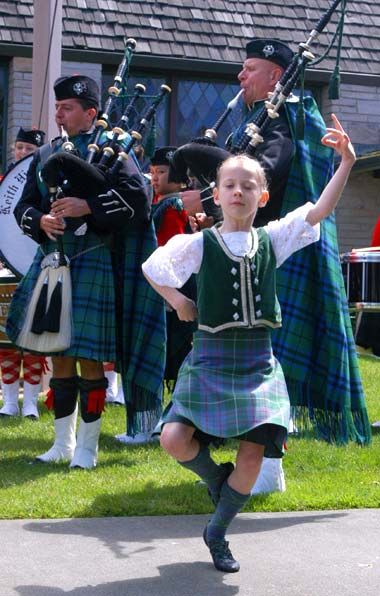
Happy Tartan Day

Image hosted by Photobucket.com
Today is Tartan Day, a celebration of Scottish heritage. Several people wore their ethnic gear to church today, which was pretty cool. Not sure if you might be a Scotsman? Get you Mormon friends and neighbors to help you with a little genealogical research. And while you're at it, wish them a Merry Christmas.

Thursday, April 03, 2008

Defender of the Sacraments

Photobucket
The title "Defender of the Faith" was confirmed for King Henry VIII by Pope Leo X in honor of the King's book Assertio Septem Sacramentorum (Defense of the Seven Sacraments), which the English king wrote in 1521 in response to the rise of Lutheranism. The book is back in print, with a commentary by Raymond de Souza. To read an older Latin/English edition of the book with commentary by the Rev'd Louis O'Donovan, click here. It is generally agreed that on some counts, Henry misunderstood some points that Luther made (which was first provoked by abuses of the sacraments). But Henry had no misunderstanding about explaining the traditional teaching of the Church and taking a stand for the sacraments. In a cover letter for his book given to the pope, Henry wrote:

Most Holy Father:

No duty is more incumbent on a Catholic sovereign than to preserve and increase the Christian faith and religion and the proofs thereof, and to trans­mit them preserved thus inviolate to posterity, by his example in preventing them from being destroyed by any assailant of the Faith or in any wise impaired.

So, when we learned that the pest of Martin Luther's heresy had appeared in Germany and was raging everywhere, without let or hindrance, to such an extent that many, infected with its poison, were falling away, especially those whose furious hatred rather than their zeal for Christian Truth had prepared them to believe all its subtleties and lies; we were so deeply grieved at this heinous crime of the German nation (for whom we have no light regard), and for the sake of the Holy Apostolic See, that we bent all our thoughts and energies on up­rooting in every possible way, this cockle, this heresy from the Lord's flock.

When we perceived that this deadly venom had advanced so far and had seized upon the weak and ill-disposed minds of so many, that it could not easily be overcome by a single effort, we deemed that nothing could be more efficient in destroying the contagion than to declare these errors worthy of condemnation, after they had been examined by a con­vocation of learned and scholarly men from all parts of our realm.

This course of action we likewise recommended to a number of others. In the first place, we earnestly entreated His Imperial Majesty, through our fraternal love for him, and all the electoral princes, to bethink them of their Christian duty and their lofty station and to destroy this pernicious man, together with his scandalous and heretical publications, after his re­fusal to return to God.

But convinced that, in our ardour for the welfare of Christendom, in our zeal for the Catholic Faith and our devotion to the Apostolic See, we had not yet done enough, we determined to show by our own writings our attitude towards Luther and our opinion of his vile books; to manifest more openly to all the world that we shall ever defend and uphold the Holy Roman Church, not only by force of arms but by the resources of our intelligence and our services as a Christian.

For this reason we have thought that this first attempt of our modest ability and learning could not be more worthily dedicated than to your Holiness, both as a token of our filial reverence and an acknowledgment of your careful solicitude for the weal of Christendom.

We feel assured that our first fruits will be enhanced in value if it be approved by the wholesome judgment of your Blessedness. May you live long and happily!

From our Royal Palace at Greenwich, the twenty-first day of May, 1521.

Your Holiness' most devoted and humble son, Henry, by the grace of God King of England and France, and Lord of Ireland.

Summer course in theology

Looking to brush up on your theology? Consider a summer course, such as this June offering from the Episcopal Divinity School in Cambridge, MA:

T 3150 Queer Incarnation
Jordan
June 2-13, 2008: 7:00-9:00 pm

The incarnation is sometimes presented as an arithmetic problem: What do you get when you add some divinity to a human body? But thinking about incarnation has to start much further back, in the realization that accounts of Jesus show us how little we understand about either divinity or bodies, much less about how bodies can show, act, and becomes divine. Just here [sic] and theology of the incarnation can learn from works of queer theory and the writings of queer thinkers. The body of Jesus—despised, de-sexed, and yet miraculously distributed—invites us to an exchange of bodies along the margins of human power and its certainties.We will think about the queerness of Jesus’ body with the help of some traditional texts on incarnation and passion (Athanasius, Bonaventure, Aquinas, Julian) and much more recent work on gender performance, bodily transition or transformation, and the rituals of camp.

I'm not sure what the "rituals of camp" is a reference to and how it relates to either the incarnation or queerness, but there's one way to find out. The class is listed on page 37-38 of the EDS catalog. When I heard about this on Tuesday, I thought it was an April Fool's Day joke. But I guess the joke's on me. I'm glad you don't find this kind of thing at Nashotah House, my alma mater.

Goofy religious lingo

There are some common expressions in church-speak that just don't make sense to me. Perhaps you know of more to add to the list.

"Make Eucharist"
Oddly enough, this one actually occurs in the Prayer Book (p 401), but that doesn't mean it makes any sense. The word eucharist is the Greek word meaning "thanksgiving" which is used as a title for either the liturgy of the Mass or for the Communion elements themselves. Wouldn't it make more sense to say "give thanks" rather than "make Eucharist"? After all, I've never heard anyone say "make Christmas" or "make worship." "Make Eucharist" could also give the impression that creating the Real Presence is something that we do rather than something that God does.

"Do theology"
This one is so common, but none the less weird. It should be "study theology" or "make a theological argument" or even "theologize." This conjugation doesn't sound right for any other academic discipline; why would it make sense only for the study of God? Have you ever heard anyone say that they were going to "do geology," "do psychology," or "do medicine"?

"!!!!!!"
Have you EVER noticed (!) how much shouting seems to go on in church bulletins and newsletters!! I suppose it comes out of a frustration from a perceived lack of interest or volunteers (!!!) and is thus an ATTEMPT TO GET NOTICED!!!!!!!! That is combined with a lack of common grammar skills. Our English departments have let us all down on that one. There is very little grammar in grammar school. I was surprised that I never had a grammar class until my last semester in college. You have no idea how useful that could have been for all those previous years of paper writing!!!

Not many people understand exclamation points. In case you were wondering how to properly use that punctuation, here goes. It should be used sparingly in quotes to indicate that the speaker is shouting or otherwise highly excited (e.g., "Look out!"). The other case is when it is used at the end of a sentence with an exclamatory sentence structure, beginning with "What" or "How" and ending with a verb (e.g., "What big eyes you have!" or "How very right you are!").

Wednesday, April 02, 2008

See Ben Stein's movie


Expelled comes out in theatres on April 18th. I'm looking forward to it, because it is about time someone addressed the hypocrisy. The science community is not aloof from the same problems of bias, bigotry, closed-mindedness, peer pressure, tenure and the politics of academia that every other discipline has to deal with. Far from it.

Science would be best served by some pressure to follow its own method and to stay true to its quest--the search for truth. For some more background, here is the Factor interview.

Saturday, March 22, 2008

Christos anesti!

Photobucket
It was a joy to baptize my godson George Preston Alexander Sparkman tonight. He is the baby pictured below. To listen to the sermon that I gave, click here.
Photobucket

Photobucket

Photobucket

Photobucket

Photobucket

Friday, March 21, 2008

Flowering of the Passion

Photobucket
Legend has it that in 1620 a Jesuit Priest came across the plant we now know as passion flower. Enthralled with its beauty, that night he had a vision likening its floral parts to the elements of the passion of Christ. The five petals and five sepals became the ten apostles (omitting Peter who denied Jesus and Judas who betrayed Jesus). The three pistils became the nails of the cross; the purple corona (or filaments) was the crown of thorns, and the stemmed ovary was the Lord's chalice of suffering which he accepted at Gethsemane.

The night in which he was betrayed

Photobucket
To listen to this sermon online, click here.

Jesus said, “ ‘Behold, the hand of him who betrays me is with me on the table’ And [the disciples] began to question one another about which of them it was who would do this”; from the Gospel of St Luke in the Name of the Father, and of the Son, and of the Holy Ghost.

Tonight we commemorate the institution of the priesthood and of the Holy Eucharist. And to help us appreciate what is in the spotlight tonight, I’d like us to turn our attention for a moment to what lies in the shadows—a man who rejected his ministry and who broke communion.

We do not know for sure at exactly what point Judas Iscariot left the Upper Room. Luke’s gospel mentions Judas’ betrayal after the words of institution along with various items of dinner conversation that seem to be listed in no particular order. Matthew and Mark give an almost identical description of Judas at the table before those crucial words of Jesus “this is my Body” and “this is my Blood.” John’s gospel does not give us the familiar institution narrative, but he does, however, mention the early departure of Judas after the washing of feet and before Jesus’ high-priestly prayer.

We are told that the others thought that Judas left to go purchase more supplies for the Passover feast, since he was the one who carried the common purse. This would indicate that Judas left before the Holy Communion, which took place, as the other gospels tell us, “after supper.” Another clue to the timing might be in Jesus’ clue about the betrayer. “It is the one to whom I hand the morsel after I have dipped it,” Jesus said. Then he adds, “What you are about to do, do quickly.”

Exactly when he left, we do no know for sure. But we do know why he left. Why is this night different from all other nights? That departure forever colored the ritual that would continue in the Mass throughout history—the sacrament of unity, the feast of love. For in most every Prayer Book and every liturgical rite throughout Christendom, those sacred words of consecration are introduced the same way: “On the night in which he was betrayed . . .” [Note: Prayer A has different wording, "the night he was handed over" and Prayer D, which is based upon the Liturgy of St Basil, uses John's language, "when the hour had come for him to be glorified."]

I remember turning the pages through a large picture book on Jesus I picked up from a used book store a few years ago. It’s a wonderful book with gospel excerpts, and it is filled with historic Christian artwork depicting the people and events described. When I got to the page describing the Last Supper, I stopped when I saw the picture. I had never seen anything like it before.

It was a picture of the Last Supper in the traditional style of the Eastern icon. Jesus and the apostles were each depicted with a halo or nimbus around the head. Normally, if Judas is in the scene, you can clearly identify him because he is the only one who does not have a halo around his head. This picture caught my attention because it is the only one I’ve seen in which Judas does have a halo. The difference is that unlike the other nimbuses, which are golden, the halo of Judas is solid black.

Judas Iscariot will be eternally known as the man who betrayed Jesus Christ. In at least twenty languages, his name is a synonym for “traitor.” To think of Judas, or to mention his name, is to evoke the image of the whole-cloth traitor. He is the traitor prototype.

Yet there is no good reason for supposing that when he was originally called by Jesus to be one of his own special disciples that Judas was already up to treachery; or that he was any less enthusiastically devoted to Jesus, any less worthy of that call, or any less determined to follow Jesus to the end than the eleven others chosen by Jesus at the same time. Nor can we suppose that Jesus withheld from Judas any of the special divine graces that he conferred on the other disciples who were to hold the office of apostle.

Judas seems to have shared completely in the charism of what would later be called an Apostle, a chief pastor, thus prefiguring—as did all of the Twelve—what we call today the bishops (overseers) of the Church. Living with Jesus day and night, traveling with him, hearing his words and seeing his actions, collaborating with him in his work, sent out by Jesus with a mandate to preach the kingdom of God, to cure the sick, to exorcise demons, to exercise his authority, to rely on spiritual weapons and supernatural means, Judas was in every sense one with the disciples.

Yet it was Judas who finally betrayed Jesus. The personal outline of Judas in the pages of the New Testament is dim on all points—except for his awful treachery. Understandably, the writers would not, could not, remark anything good or even interesting about Judas, except his treachery. In the light of Jesus’ resurrection and the subsequent descent of the Holy Spirit on the remaining Apostles, all that mattered in the eyes of the New Testament writers was that gross treachery, and all they could express for the traitor was utter contempt and abhorrence.

There is perhaps no parallel in the New Testament record to those sad words of Jesus, “It would have been better for him if he had never been born.” And yet that’s not what Jesus wanted for him, at the beginning or the end. The New Testament dismissal of Judas as a traitor has inclined Christians to see him in a bad light from the beginning of his association with Jesus, as a kind of infiltrator admitted by Jesus to the intimacy of his special people, because, it was reckoned, somebody had to betray the Lord.

Yet, we must understand that it didn’t have to happen that way. Jesus could have simply said, “The time is appointed. Let us go down to see the Sandhedrin that I may stand trial for the charges against me.” Judas’ betrayal was utterly unnecessary.

From a divine and a human point of view, Judas must have initially appeared as one of the more promising candidates for leadership in Christ’s future Church. Judas seems to be the only experienced official among the group. In the eyes of the other Apostles, Judas held a high kingdom office.

We cannot reasonably doubt that Judas started off with great enthusiasm and devotion to Jesus, and with full trust and confidence in Jesus’ ultimate success. We know that, for the other companions (until well after the Resurrection) success meant a political restoration of the Kingdom of Israel, with the Apostles occupying twelve thrones of judgment.

Here is where disillusion set in for Judas Iscariot. More in touch with practical affairs than the others, more alive to the politics of his land, he would only grow in disillusionment each time Jesus repudiated attempt after attempt to crown him leader and king. Jesus spoke instead of his suffering and death.

At any given moment Judas could have left Jesus and “walked with him no more,” as many are recorded to have done. But no, Judas wanted to stay. He believed, after his own fashion, in Jesus and his group and their ideals. Yet, he wanted Jesus and the others to be realistic—i.e., to conform to political and social realities, to follow his plan, not whatever plans Jesus may have had.

He certainly formed his own ideas about the sensible way Jesus should go about seizing supreme power and realizing the kingdom of God. Now, in the heady atmosphere of collaboration with the authorities, he saw his way opening out to vistas of greatness, a chief position in the future Kingdom of Israel, once the Romans were driven out and the local Jewish leaders, with the help of Jesus, utterly defeated the hated Romans.

Even when Jesus told him plainly and frankly during that last Passover meal that, yes, he knew it was Judas who would betray him, that made no dent in Judas’ resolution. “Is it I, Master?” said Judas. “You have said so,” Jesus answered.

Remember that Jesus identified his betrayer in this way: “It is the one to whom I hand the morsel after I have dipped it.” From the ritual of the Passover, this seems to follow the blessing over the Matza before the actual supper began. The blessing and breaking of a single piece of matza to be shared with everyone at the table signified their unity. For the head of the supper to dip it in the haroset and give it to one of the guests was a token of affection. Yet both this loving gesture and the fact that Jesus knew about the betrayal were not enough to dissuade Judas from the path he had chosen.

Perhaps Judas did not fully grasp Jesus’ use of the word “betray” at that moment. Many times in the past, he had “betrayed” Jesus in the sense that he had done the opposite of Jesus’ express will, and things had always turned out just fine. That compromise plan still seemed the best to Judas. The ultimate blindness closed in on his soul like a steel trapdoor. “Satan,” the Gospel of John states, “entered his heart.” And we can be sure he was in some sense welcomed in.

Judas was now under the control of the one personality who stood to lose the most by any success Jesus might have. Judas could, without any scruple and always fully persuaded that his plan was fine, go and find the Temple authorities, his “high-level contacts,” and pinpoint the place where Jesus would be at a certain hour, and identify Jesus to the armed force sent out to bring him in.

Only this, thought Judas, would spark the long-sought fight for liberation. Every single event that followed began with Judas’ decision. It all began, “On the night in which he was betrayed” . . .

The terrible agony in Gethsemane; the violence done to Jesus at his arrest and at his mock trials during the night; the hours of imprisonment and abuse by Roman soldiers; the crowning with thorns and the scornful mocking of his person, his arraignment before Pilate and Herod; his scourging; the painful, agonizing path to Golgotha; the searing pain of crucifixion, followed by three hours of waiting for the peace of death,hours divided into weakening efforts not to suffocate.

While the ultimate consequence of Judas’ choice was Jesus’ crucifixion, his specific sin was compromise And we must understand that it really seemed to him a wise and prudent compromise given the impossible situation into which Jesus had boxed himself and his disciples by his violent attacks on the status quo and by his refusal to meet Jewish authorities halfway.

This, then, is the essence of the "Judas complex": one’s compromise of basic principles in order to fit in with the ideas and interests of the world.

The principle of the disciples was Jesus—his person, his authority, his teaching. Their obligation was to Jesus, to remain faithful through conflict and confusion. Judas had been persuaded by his corrupters that all that Jesus stood for had to be modified by a decent and sensible compromise.

Judas was not the only disciple who deserted Jesus in that trying moment—they all did. Judas was not the only one who sinned. He was not the only one who ran away. Peter’s denial was also foretold. So how was Judas different from the rest? He was the only one who did not come back.

Ironically, though he chose compromise with the world over faithfulness to Christ, his own sense of shame and guilt was uncompromising. Judas never gave a thought or opportunity to his own forgiveness. He never thought that the one who had forgiven so many sins and healed so many hearts would welcome back one of his own. His soul was lost to despair and the Satan who had entered his heart was surely pleased when he executed himself, hanging on a tree outside Jerusalem—one last mockery.

Do not be like Judas. Beware, is easier have a Judas complex than you think. If you do, you’d probably be the last person to see yourself as a betrayer. It is so easy to fall into the trap of what may seem like a sensible compromise with the world.

Tonight, no matter how far you have wandered into the world, no matter how often you may have faced the challenges of the faith with what may have seemed at the time like a sensible compromise, you have the opportunity to some back to the Table.

Which such a precious gift as the body, blood, soul, and divinity of Jesus Christ, it’s hard to imagine that anyone would compromise their loyalty to him. And yet we do. We wander and stray from his ways like lost sheep, following the devices and desires of our own hearts.

“Is it I, Lord?” Note: the question is not “Is it him, Lord?” or “Is it her, Lord?” but “Is it I, Lord?” That may be the most healthy question we can ponder to prepare our hearts to return to his Table of Fellowship and Altar of Sacrifice. The turning point for Judas was very subtle—the idea that I know better than the Lord. He was willing to compromise his Lord because he thought he knew better. And yet, Jesus’ love for Judas (from day one) was never compromised. When Jesus offered himself as an atonement for the sins of the world, Jesus was offering himself for Judas too.

Oh, that he had only repented and accepted God’s mercy like the others. “The Son of Man goes as it is written of him, but woe unto that man by whom the Son of Man is betrayed. It would have been better for him if he had never even been born.”

Thursday, March 20, 2008

Maundy Thursday: Mass and Priesthood

Photobucket

“For as often as ye eat this bread, and drink this cup, ye do shew the Lord’s death till he come.” 1 Corinthians 11:26

We gather on the Thursday of this Holy Week to begin recalling the central mysteries of our redemption—the betrayal, death, burial, and resurrection of our Lord Jesus Christ. A few weeks ago, I was looking ahead at my books on ceremonial about the liturgies of Holy Week, and I came across a curious thing. I don’t recall many ceremonial directives about sermons in there. But there was one for one day this week—Maundy Thursday. It read, “It is proper that, at the usual point, a sermon should be preached on the Holy Eucharist and the priesthood” (E. C. R. Lamburn, Ritual Notes, 11th Ed., p. 320).

I thought I might do just that, for an understanding of the Eucharist and the priesthood seems essential, not only for grasping the truths about this night, but also for grasping the meaning of the redemptive suffering, death, and resurrection of our Lord Jesus Christ. One thing that should be made clear from the beginning is that, for his holy Catholic Church in all times and places, Jesus is our great High Priest. “Priest” comes from the Greek word presbyter, which means “elder.”

A priest is by definition one who is an elder or wise leader within a community, or one who serves as the father of a tribal family. In that position, he is set apart or “consecrated” to God and his service. A priest is devoted to God with his entire being, and thus devoted to God’s people as well. A priest is an intercessor and a mediator. He goes to meet with God on behalf of the people, and he speaks to the people on behalf of God.

We might say that priesthood began with Adam. He was created in God’s image, to do the will of God as his servant. And as a being made to be a reflection of God’s own image, Adam was a priest. He was consecrated to God in all his being. Humanity fulfilled God’s will through Adam, who conversed with him face-to-face. But sin damaged that office in which Adam stood as a pries of God. In Adam we became rebellious priests—disobedient sons. In his disobedience, we embraced the opposite of a priestly office. Instead of consecrating our life and labor to God, we withheld it as our own, saying, “My will be done.” With the advent of sin, we became unworthy to minister to the Lord.

The priestly duty of offering sacrifice means presenting a gift to God as a sign of love, in recognition of his supreme dominion over all creation. Our sinful nature wants to claim dominion for ourselves alone. Yet, in his mercy, God nurtured the ministry of the patriarchs and the elders of Israel even as they offered imperfect worship. He taught them through prophets, and raised up priests to reconsecrate the people to the Lord. Indeed, the people as a whole were a kind of nation of priests, sanctifying the world by being a holy presence within it—a “light to the nations.”

Sin brought a new task to priestly work—making atonement for sin. Sacrifice would henceforth not merely be a sign of love, it would also be a desperate plea for mercy. The problem was that such priests, rebellious by nature, could only offer imperfect sacrifices. These were but a type or shadow of the real thing. In the fullness of time, God sent his Son into the world. The eternal Word took human flesh from the blessed Virgin Mary. This was the new Adam—the obedient and humble servant. The first Adam brought sin and death into the world; the second Adam brought forgiveness and life.

St Paul put it this way in his letter to the Church of Rome: “For as by the one man’s disobedience, many were made sinners, so by the one man’s obedience the many will be made righteous” [Romans 5:19]. As the righteous servant, Jesus was able to be the priest that Adam was not. Jesus could offer the one true pleasing sacrifice to God the eternal Father, because he offered it with a truly sinless and humble heart. And that fulfillment of all sacrifices was to be the gift of himself. “For in [Jesus] all the fullness of God was pleased to dwell,” St Paul wrote to the Colossians, “and through him to reconcile to himself all things, whether on earth or in heaven, making peace by the blood of his cross. And you, who were once alienated and hostile in mind, doing evil deeds, he has now reconciled in his body of flesh by his death, in order to present you holy and blameless before him” [Colossians 1:19-20]. The union of the human and divine in Jesus is essential to his priestly work.

Holy Week and Easter have no real meaning without the Incarnation. The human and divine natures are united in the one person of Christ, as the ecumenical council of Chalcedon puts it: united “without confusion, without change, without division, and without separation” [BCP, p. 864]. He is the one mediator between God and man—bringing divinity and humanity together in himself. And in bringing the two together, Jesus mediated a New Covenant. The Old Covenant was sealed with the shedding of blood. When Moses declared all the commandments of God to the people, he took the blood of calves and goats, and sprinkled both the book of the Law and the people, saying, “This is the blood of the covenant that God commanded for you” [Exodus 24:6-8].

This act of Moses long ago foreshadowed the way that the New Covenant would be sealed in the shed blood of Christ. Jesus offered himself to the Father as the Passover lamb on this night—a sacrifice to spare people from their sins, just as the blood of the Passover lamb spared the lives of the Hebrews when they marked their door-posts with its blood so the angel of death would know to pass over them.

The author of Hebrews speaks a great deal about Jesus as our great High Priest. The crucifixion is a kind of liturgy. Jesus enters the veil of heaven through his death to offer his own blood on the mercy seat, just as the high priest of Israel offered the blood of bulls and goats in the Holy of Holies on the day of Atonement. Jesus is our great High Priest.

In his divine plan, our blessed Lord wanted to share that priesthood with us. Like Israel before, those in his Church are to be “a chosen people, a royal priesthood, and a holy nation . . .” [1 Peter 2:9]. Together, the laos (the "people" of God), by virtue of their union with Christ in holy Baptism, share in what we call “the priesthood of all believers.” This is a ministry of service, love, and mission, to which all Christians are called. Believers must mediate Christ’s love and his saving gospel to the world. Like Israel, we are to be a “light to the nations.” Jesus often spoke of a kind of renewal of Israel in the kingdom of God; part of that messianic mission was to renew Israel’s elders. While he is the only true priest or elder, he shares that priestly work with those whom he calls in his Church.

Early in Mark’s gospel, we read, “He now went up onto the mountain and summoned those he wanted. And he ordained Twelve that they might be with him and that he might send them forth to preach, and to have the power to heal sickness, and to cast out devils” [Mark 3:14-15]. Jesus called out certain men whom he ordained to do the kinds of things he was doing. As Moses laid hands on Joshua and gave him authority to care for the people, Jesus gave the Twelve authority to teach and to heal, and even gave them a share in his ministry of divine reconciliation.

After his resurrection, we read in John’s gospel, “Then Jesus said unto [the apostles] again, ‘Peace be unto you: as my Father sent me, even so I send you.’ And when he said this, he breathed on them and said, ‘Receive the Holy Spirit: whose sins you forgive are forgiven; and whose sins you retain are retained’” [John 20:20-23].

However, in theological discourse down through the years, when teachers and bishops talked about the institution of holy orders, they did not so much look to this early mountaintop experience nor to this post-resurrection blessing as they did to the Upper Room. The
institution of the Christian ministerial priesthood is always connected with the institution of the holy Eucharist—Sacrament of the Altar.

One of the best books for those studying for the priesthood is The Christian Priest Today by the late Archbishop of Canterbury, Arthur Michael Ramsey. In an early chapter called “Why a Priest,” he outlines four unique qualities of the priest in today’s Anglican Church. The priest is the “man of theology”, the “minister of reconciliation,” the “man of prayer”, and the “man of the Eucharist.” Concerning the last quality, he notes the following:

“The liturgy indeed belongs to all the people. We being many are the one bread, one body. We take, we break, we offer, we receive . . . Where then, and why then, the priests? As a celebrant, he is more than the people’s representative. In taking, breaking, and consecrating, he acts in Christ’s name and in the name not only of the particular congregation, but of the holy Catholic Church down through the ages. By his office as celebrant he symbolizes the focusing of the Eucharist in the givenness of the historic gospel and in the continuing life of the Church as rooted in that gospel. He finds that at the Altar he is drawn terribly and wonderfully near not only to the benefits of Christ’s redemption, but to the redemptive act itself”
[A. M. Ramsey, The Christian Priest Today, pp. 9-10].

Archbishop Ramsey touches upon two fundamental truths about the connection between the Eucharist and the priesthood. The first is summed up in the old theological axiom sacerdos alter Christus“the priest is another Christ.” That is, by virtue of the grace of holy orders, the Christian priest is indelibly and metaphysically conformed to Christ—the ultimate source and irreplaceable model of his priesthood. Thus, Jesus’ will that the apostles “do this as my memorial” requires that they stand in the place of Christ and speak his words (i.e., not “this is his Body”, but “this is my Body.”)

The second truth Ramsey touches upon is that the Eucharist is a participation in Christ’s redemptive work. It is not simply a reminder that these things once happened—a mere symbol or aide to help call to mind past events. Rather, the Eucharist is a real participation in past events, the constitutor of a present reality, and the foretaste of the future kingdom.

The Eucharist manifests past works of God’s redemption. St Paul told the Corinthian Church, “as often as you eat the bread and drink the cup, you proclaim the Lord’s death till he comes” [1 Corinthians 11:26]. The catechism of the Prayer Book reminds us, “The Holy Eucharist, the Church’s sacrifice of praise and thanksgiving, is the way by which the sacrifice of Christ is made present, and in which he unites us to his one offering of himself” [BCP, p. 859]. Not only does the Eucharist participate in past events, it is also a present reality. In the blessed Sacrament, Jesus is our “Emmanuel”—God with us. The Word made flesh tabernacles among us. It is in the celebration of the holy Eucharist that the Church is constituted—the mystical Body of Christ on earth.

While the Eucharist is a participation in past and present, let us not forget that the Eucharist is also about the future. Indeed, the second Advent of Christ was the dominant imagery in the Eucharist of the Church in the early centuries. Jesus said, “Whoever eats my flesh and drinks my blood has eternal life, and I will raise him up at the last day” [John 6:54]. By receiving Holy Communion, we receive a foretaste of eating and drinking at his table in the kingdom [Luke 22:30].

We can see the connection between the Eucharist and priesthood from the Last Supper. At the Passover meal Jesus shared with his disciples this night, the pure unleavened bread was broken into quarter portions, and one portion, called the afikomen, was hidden away in a cloth and laid aside. No one really knew why, except that it had always been done that way before. It was also called the Bread of Redemption, and it usually went uneaten. Many suspect that it was this portion that Jesus took, broke, and gave to his disciples saying, “Take eat, this is my Body.”

There were four cups of wine during the meal and it was the third cup, traditionally called the Cup of Redemption or the Cup of Blessing which Christ gave to them saying, “Take and drink; this is my Blood of the New Covenant poured out for you.” St Paul noted, “The cup of blessing which we bless, is it not the communion of the Blood of Christ?” [1 Corinthians 10:16].

And what of the fourth cup of wine in the Passover meal? At that point, Jesus said, “I will not drink of this fruit of the vine from now on until that day when I drink it new with you in my Father’s kingdom” [Matthew 26:29]. The fourth cup was known as the Cup of Consummation—the cup in which God takes us as his people. After sharing the cup of his precious Blood, Jesus left the liturgy unfinished. Or perhaps we should say, the liturgy continued—in the Garden, at the cross, and at the tomb.

Jesus left the fourth cup on the table because there was another new element in the Seder liturgy; there was a new cup from which to drink; for Jesus, it would be the cup of suffering. Isaiah and Jeremiah had prophesied that the Messiah would drink from the cup of God’s wrath. The grapes of wrath would be churned in the wine-press and the cup of divine wrath would be poured out against sin. Jesus prayed in the Garden of Gethsemane, “Father, if it be possible, let this cup pass from me. Nevertheless, not as I want, but as you want” [Matthew 26:39].

When he was first put on the cross, they offered Jesus wine mingled with myrrh, but he would not take it. “I will not drink of the fruit of the vine until I drink it new in the kingdom.” He hung there on the tree for about three hours. One of the last things that happened before Jesus died was that he looked down and said, “I thirst.” John’s gospel tells us there was a bowl of sour wine nearby. So they put a sponge on the end of a hyssop branch, (note: the same kind of branch used to mark the door-posts with lamb’s blood at the first Passover) dipped it in the wine and raised it up to his lips. And when he drank it, Jesus said, “It is finished.” And bowed his head and gave up his spirit [see John 19:30].

It is finished. It is consummated. The Mass has ended. The Liturgy is over. He drank the final cup, the Cup of Consummation, and brought us into the kingdom of God, for the gate of heaven’s kingdom stands at the cross on Golgotha.

The cup of blessing which we bless, is it not the communion of the Blood of Christ? He drank from the cup or wrath that we might drink from the cup of blessing. Jesus gathers with us here tonight; he presides over our Passover meal through his priest at the Altar. He is himself the Passover Lamb slain for the sins of the world. The sacrificial banquet is spread on the table before us. “Christ our Passover has been sacrificed for us,” St Paul said, “therefore let us keep the feast” [1 Corinthians 5:7]. Jesus bids us to come to his holy Table and eat and drink tonight. All is prepared. “Come ye blessed of my Father, and inherit the kingdom prepared for you from the foundation of the world” [Matthew 25:34].

Almighty Father, whose dear Son, on the night before he suffered, did institute the Sacrament of his Body and Blood: Mercifully grant that we may thankfully receive the same in remembrance of him who in these holy mysteries giveth us a pledge of life eternal, the same thy Son Jesus Christ our Lord; who now liveth and reigneth with thee and the Holy Spirit, one God, world without end. Amen.

Wednesday, March 19, 2008

Continuity and Fidelity

Photobucket
This week, in dioceses around the world, clergy will renew their ordination vows at the Bishop's Mass of Chrism. In the diocese of Fort Worth, we did this on Holy Tuesday at St Vincent's Cathedral. You can read Bishop Iker's sermon here. In case you were wondering what those vows are anyway, I have vows belonging to the order of priest below, followed by the all-important preface to the ordination rites. As some of our clergy were ordained before 1979 under the ordinal of a previous Prayer Book, I have included that wording also.

The Examination (1979)
All are seated except the ordinand, who stands before the Bishop. The Bishop addresses the ordinand as follows
My brother, the Church is the family of God, the body of Christ, and the temple of the Holy Spirit. All baptized people are called to make Christ known as Savior and Lord, and to share in the renewing of his world. Now you are called to work as pastor, priest, and teacher, together with your bishop and fellow presbyters, and to take your share in the councils of the Church.

As a priest, it will be your task to proclaim by word and deed the Gospel of Jesus Christ, and to fashion your life in accordance with its precepts. You are to love and serve the people among whom you work, caring alike for young and old, strong and weak, rich and poor. You are to preach, to declare God's forgiveness to penitent sinners, to pronounce God's blessing, to share in the administration of Holy Baptism and in the celebration of the mysteries of Christ's Body and Blood, and to perform the other ministrations entrusted to you.

In all that you do, you are to nourish Christ's people from the riches of his grace, and strengthen them to glorify God in this life and in the life to come.

My brother, do you believe that you are truly called by God and his Church to this priesthood?
Answer I believe I am so called.

Bishop Do you now in the presence of the Church commit yourself to this trust and responsibility?
Answer I do.

Bishop Will you respect and be guided by the pastoral direction and leadership of your bishop?
Answer I will.

Bishop Will you be diligent in the reading and study of the Holy Scriptures, and in seeking the knowledge of such things as may make you a stronger and more able minister of Christ?
Answer I will.

Bishop Will you endeavor so to minister the Word of God and the sacraments of the New Covenant, that the reconciling love of Christ may be known and received?
Answer I will.

Bishop Will you undertake to be a faithful pastor to all whom you are called to serve, laboring together with them and with your fellow ministers to build up the family of God?
Answer I will.

Bishop Will you do you best to pattern your life [and that of your family, or household, or community] in accordance with the teachings of Christ, so that you may be a wholesome example to your people?
Answer I will.

Bishop Will you persevere in prayer, both in public and in private, asking God's grace, both for yourself and for others, offering all your labors to God, through the mediation of Jesus Christ, and in the sanctification of the Holy Spirit?
Answer I will.

Bishop May the Lord who has given you the will to do these things give you the grace and power to perform them.
Answer Amen.


The Examination (1928)
¶ Then, the People being seated, the Bishop shall say unto those who are to be ordained Priests as followeth.
YE have heard, Brethren, as well in your private examination, as in the exhortation which was now made to you, and in the holy Lessons taken out of the Gospel, and the writings of the Apostles, of what dignity, and of how great importance this Office is, whereunto ye are called. And now again we exhort you, in the Name of our Lord Jesus Christ, that ye have in remembrance, into how high a Dignity, and to how weighty an Office and Charge ye are called: that is to say, to be Messengers, Watchmen, and Stewards of the Lord; to teach, and to premonish, to feed and provide for the Lord’s family; to seek for Christ’s sheep that are dispersed abroad, and for his children who are in the midst of this naughty world, that they may be saved through Christ for ever.

Have always therefore printed in your remembrance, how great a treasure is committed to your charge. For they are the sheep of Christ, which he bought with his death, and for whom he shed his blood. The Church and Congregation whom you must serve, is his Spouse, and his Body. And if it shall happen that the same Church, or any Member thereof, do take any hurt or hindrance by reason of your negligence, ye know the greatness of the fault, and also the horrible punishment that will ensue. Wherefore consider with yourselves the end of the Ministry towards the children of God, towards the Spouse and Body of Christ; and see that ye never cease your labour, your care and diligence, until ye have done all that lieth in you, according to your bounden duty, to bring all such as are or shall be committed to your charge, unto that agreement in the faith and knowledge of God, and to that ripeness and perfectness of age in Christ, that there be no place left among you, either for error in religion, or for viciousness in life.

Forasmuch then as your Office is both of so great excellency, and of so great difficulty, ye see with how great care and study ye ought to apply yourselves, as well to show yourselves dutiful and thankful unto that Lord, who hath placed you in so high a dignity; as also to beware that neither you yourselves offend, nor be occasion that others offend. Howbeit, ye cannot have a mind and will thereto of yourselves; for that will and ability is given of God alone: therefore ye ought, and have need, to pray earnestly for his Holy Spirit. And seeing that ye cannot by any other means compass the doing of so weighty a work, pertaining to the salvation of man, but with doctrine and exhortation taken out of the Holy Scriptures, and with a life agreeable to the same; consider how studious ye ought to be in reading and learning the Scriptures, and in framing the manners both of yourselves, and of them that specially pertain unto you, according to the rule of the same Scriptures; and for this self-same cause, how ye ought to forsake and set aside, as much as ye may, all worldly cares and studies.

We have good hope that ye have well weighed these things with yourselves, long before this time; and that ye have clearly determined, by God's grace, to give yourselves wholly to this Office, whereunto it hath pleased God to call you: so that, as much as lieth in you, ye will apply yourselves wholly to this one thing, and draw all your cares and studies this way; and that ye will continually pray to God the Father, by the mediation of our only Saviour Jesus Christ, for the heavenly assistance of the Holy Ghost; that, by daily reading and weighing the Scriptures, ye may wax riper and stronger in your Ministry; and that ye may so endeavour yourselves, from time to time, to sanctify the lives of you and yours, and to fashion them after the Rule and Doctrine of Christ, that ye may be wholesome and godly examples and patterns for the people to follow.

And now, that this present Congregation of Christ may also understand your minds and wills in these things, and that this your promise may the more move you to do your duties; ye shall answer plainly to these things, which we, in the Name of God, and of his Church, shall demand of you touching the same.

DO you think in your heart, that you are truly called, according to the will of our Lord Jesus Christ, and according to the Canons of this Church, to the Order and Ministry of Priesthood?
Answer. I think it.

Bishop. Are you persuaded that the Holy Scriptures contain all Doctrine required as necessary for eternal salvation through faith in Jesus Christ? And are you determined, out of the said Scriptures to instruct the people committed to your charge; and to teach nothing, as necessary to eternal salvation, but that which you shall be persuaded may be concluded and proved by the Scripture?
Answer. I am so persuaded, and have so determined, by God’s grace.

Bishop. Will you then give your faithful diligence always so to minister the Doctrine and Sacraments, and the Discipline of Christ, as the Lord hath commanded, and as this Church hath received the same, according to the Commandments of God; so that you may teach the people committed to your Cure and Charge with all diligence to keep and observe the same?
Answer. I will so do, by the help of the Lord.

Bishop. Will you be ready, with all faithful diligence, to banish and drive away from the Church all erroneous and strange doctrines contrary to God's Word; and to use both public and private monitions and exhortations, as well to the sick as to the whole, within your Cures, as need shall require, and occasion shall be given?
Answer. I will, the Lord being my helper.

Bishop. Will you be diligent in Prayers, and in reading the Holy Scriptures, and in such studies as help to the knowledge of the same, laying aside the study of the world and the flesh?
Answer. I will endeavour so to do, the Lord being my helper.

Bishop. Will you be diligent to frame and fashion your own selves, and your families, according to the Doctrine of Christ; and to make both yourselves and them, as much as in you lieth, wholesome examples and patterns to the flock of Christ?
Answer. I will apply myself thereto, the Lord being my helper.

Bishop. Will you maintain and set forwards, as much as lieth in you, quietness, peace, and love, among all Christian people, and especially among them that are or shall be committed to your charge?
Answer. I will so do, the Lord being my helper.

Bishop. Will you reverently obey your Bishop, and other chief Ministers, who, according to the Canons of the Church, may have the charge and government over you; following with a glad mind and will their godly admonitions, and submitting yourselves to their godly judgments?
Answer. I will so do, the Lord being my helper.

¶ Then, all standing, shall the Bishop say,
ALMIGHTY God, who hath given you this will to do all these things; Grant also unto you strength and power to perform the same, that he may accomplish his work which he hath begun in you; through Jesus Christ our Lord. Amen.


Preface to the Ordination Rites (1979)
The Holy Scriptures and ancient Christian writers make it clear that from the apostles' time, there have been different ministries within the Church. In particular, since the time of the New Testament, three distinct orders of ordained ministers have been characteristic of Christ's holy Catholic Church. First, there is the order of bishops who carry on the apostolic work of leading, supervising, and uniting the Church. Secondly, associated with them are the presbyters, or ordained elders, in subsequent times generally known as priests. Together with the bishops, they take part in the governance of the Church, in the carrying out of its missionary and pastoral work, and in the preaching of the Word of God and administering his holy Sacraments. Thirdly, there are deacons who assist bishops and priests in all of this work. It is also a special responsibility of deacons to minister in Christ's name to the poor, the sick, the suffering, and the helpless.

The persons who are chosen and recognized by the Church as being called by God to the ordained ministry are admitted to these sacred orders by solemn prayer and the laying on of episcopal hands. It has been, and is, the intention and purpose of this Church to maintain and continue these three orders; and for this purpose these services of ordination and consecration are appointed. No persons are allowed to exercise the offices of bishop, priest, or deacon in this Church unless they are so ordained, or have already received such ordination with the laying on of hands by bishops who are themselves duly qualified to confer Holy Orders.

It is also recognized and affirmed that the threefold ministry is not the exclusive property of this portion of Christ's Catholic Church, but is a gift from God for the nurture of his people and the proclamation of his Gospel everywhere. Accordingly, the manner of ordaining in this Church is to be such as has been, and is, most generally recognized by Christian people as suitable for the conferring of the sacred orders of bishops, priest, and deacon.

Monday, March 17, 2008

Barabbas: the Jesus of Liberation Theology?

It occurred to me the other day, comparing Jesus bar-Abbas and Jesus bar-Joseph that Barabbas is far more akin to the Jesus of Liberation Theology than is the historical Jesus of Nazareth. After all, Jesus Barabbas was a man of the common people, popular with the crowds. He understood their situation and the reality of their oppression. He exercised a preferrential option for the poor and oppressed by getting involved in a revolt against Rome. He sought to change corrupt systems by taking prophetic action against sinful institutions. He was even willing to put his life on the line for the people and the cause he believed in.

Saturday, March 15, 2008

Holy Xenu, Batman!


I came across this internet-release film on the Church of Scientology called The Bridge. It has an interesting history and the cult's hierarchy was not happy. It is a kind of fictional expose story, from former Scientologists. Holy Xenu, Batman!

Thursday, March 13, 2008

Just a thought . . .

If you are (literally) "one in a million," you may not be as unique as you thought. After all, it means that there are about 6,700 of you around the world.