Tuesday, December 11, 2007

Between hope and hopelessness

Photo Sharing and Video Hosting at Photobucket
A sermon for Yr A, Advent 2, given at St Alban's on December 9, 2007.

To listen to the audio version, click here.

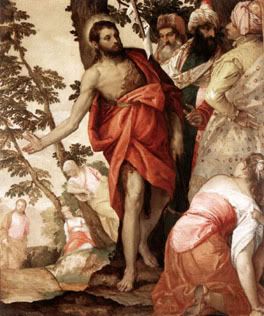
What is the difference between hope and hopelessness? I think John the Baptist would answer that it is whether or not you can have a chance at a fresh start. Of course, he’d go on to say that you desperately need one (and he’d be right).

People came out to John at the Jordan river valley for all kinds of reasons. Some were merely curious, wanting to see what the fuss was about. Some might have come as opponents, to denounce what he was doing. But those who waded into the water were looking for a fresh start. They were looking for hope. As John had said, the kingdom is near, the Lord will come soon. Who can stand before the Lord on that day, but those who are pure in heart? And how can you get purity of heart when you’ve been heading down the wrong path for so long? Wouldn’t it be wonderful if we could just begin again?

Some of you might be looking for new beginnings in your own life. Sometimes it’s just a matter of situations that we can’t control—we want a new job, a new neighborhood or new home—but very often we need a new beginning because we’ve put ourselves in an unfixable situation through our own mistakes and blunders, and even sins. You’ve messed things up by your sins, your pride, selfish, greedy, lusting sins. Now your family is messed up, your marriage is messed up, your life is messed up. And you finally realize how desperately you need to begin again. John appeared in the desert at the Jordan river, saying, “Repent, for the kingdom of heaven has come near.”

The Jewish people had a number of ceremonial washings—life was full of these ritual purifications in and out of the home (remember those six stone jars of water that Jesus turned into wine at the wedding in Cana? They were for ritual washings). People have speculated, therefore, on exactly what he was up to. Many think that John was holding a ritual which is essentially a proselyte baptism, the ritual washing of a gentile in the process of embracing the Jewish faith. Yet most, if not all, of who came to see him were fellow Jews. If so, it helps us understand that John said, in effect, “You are no better than the heathen, and like a pagan, you must start from scratch. It is time for you to begin again.”

Another insight might come from the place where John ministered in the desert. Remember that when the people of Israel left Egypt, they remained as wanderers in the Sinai desert for forty years. When that generation had passed, including Moses, it was time for his successor Joshua to lead them into the Promised Land. The spot chosen for the invasion is where the Jordan River is easiest to cross at its southern end where it flows into the Dead Sea, near the walled Canaanite city of Jericho. As they are beginning to cross the Jordan, suddenly the water stopped flowing. They cross through on dry ground, just as they did once at the Red Sea. So they pulled twelve stones out of the riverbed and erected a monument representing the twelve tribes, to commemorate God’s mercy.

John the Baptist came on the scene during a time of national humiliation, proclaiming that the time to repent had come and that the one chosen by God to deliver them was ready to appear in response to their repentance. To dramatize his message he called the multitudes down to wash themselves of sinful disobedience in the place at the Jordan River in the same place where Joshua had led them into the Promised Land. Essentially, he had them go out and come in again. He had them begin again. They were acting out their confession that they had squandered their life in the land God had given them. He symbolically collected the nation at the Jordan River, awaiting a new Joshua to lead them in.

That’s what repentance is all about—new beginnings. In Hebrew, the word means to physically turn around or reverse direction. Some of you desperately need to turn around in some area of life, and all of us can easily recall some time when we had to. In Greek, the word is a little more abstract. It means a reorientation of the mind, in stark contrast to old ways of thinking and old ways of seeing the world, and thus, old ways of doing things. At the bottom of this fundamental reorientation is a change from selfishness to selflessness, from self-centeredness to Christ-centeredness.

The ritual act of purification was taken up as a way to express that repentance--that desire to remove the stain of past failures and transgressions--and begin again with a clean heart in the land of promise. Our English word repentance has a Latin root, repoenitere, which is the expression for great sorry or intense regret. Ironically, hope for a bright tomorrow, begins with sorrow today. Let’s face it, no one turns his or her life around without first becoming discontented with the way things are and wanting to make a change for the better. In church, the word for it is “repentance.”

The fruit of that repentance is the new and changed way of living that follows. The fruit is the life ahead of you, not the life you left behind you. That means no more cheating on your husband or wife (or even flirting), or no more fornication, no more getting drunk or going to those kinds of parties, no more gambling, no more cheating, no more cussin’, no more unhealthy habits related to diet and exercise, no more gossip, no more back-biting, no more name-calling, etc. Before you start to think, “well that sounds rather boring." Remember that was the stuff that got you into trouble in the first place. Repentance begins with sorrow over our sins, becomes a change in the mind, turns into a new direction in the body, and embraces the hope of a better future.

At some point in our lives, we must all come to the conviction that we do sin—we not only fall short of God’s glory (who wouldn’t), but we willfully rebel against his will and ostracize him from our lives. That has disastrous consequences, because God is the source of life. To cut ourselves off from him is to cut ourselves off from God. That’s why St Paul wrote to the Romans (6:23) “The wages of sin is death.” Thankfully, he went on to say, “the gift of God is eternal life in Jesus Christ our Lord.”

He’s the Lord who’s coming into the world. He’s the one John the Baptist is getting us ready to receive. Jesus is the one who will be born in Bethlehem, The eternal Word of God made flesh, living as a human being. As God and man he will suffer and die on a cross outside the walls of Jerusalem to atone for the sins of the world, to make forgiveness possible. Finally, he will rise from the grave, as a sign of his vindication. He now offers us a share in his risen life, a new beginning and a bright future. John calls upon each of us to be a part of it.

As St Matthew tells the story in his gospel, many people came to him for baptism, but some of those were Pharisees and Saduccees who were unrepentant. John called them out: “You brood of vipers! Who warned you to flee from the wrath to come? Bear fruit that befits repentance.” They had nothing to show for their repentance, because they were not repentant. They had no sorrow over their own sin, no hope for a new tomorrow. They were instead self-righteous. They presumed upon God’s mercy.

These Pharisees and Sadducees trusted in their own heritage of the chosen people to save them from God’s wrath on the day of judgment. They didn’t seem to notice that the people being baptized by John in the river Jordan had the same heritage. We often do the same thing. We say, "That guy really needs to clean up his act." But then we conveniently ignore our own problems. These Pharisees and Sadducees did not see their own need to begin again, while those who came for baptism did recognize their need and turned to God for mercy.

John said to the Pharisees and Sadducees, “Bear fruit that befits repentance. Do not say to yourselves, 'We have Abraham as our father' (as if that’s all you would ever need to make yourself righteous). God is able from these stones to raise up children to Abraham.” What stones, I wonder? Could it be a reference to the stones of the monument built 1400 years earlier by the Hebrews when they entered the Promised Land? It was built as a reminder of God’s mercy, but some had forgotten they needed it.

Do not be like those self-righteous Pharisees and Sadducees who thought they had nothing to worry about. Far from it. Sin is so destructive. Turn again and again from your evil ways. That's one of our baptismal promises, "Whenever you fall into sin, repent and return to the Lord." Make you confession. Return for living water and fresh grace. This Advent, make a place in your heart to welcome Christ as Lord.

Saturday, December 08, 2007

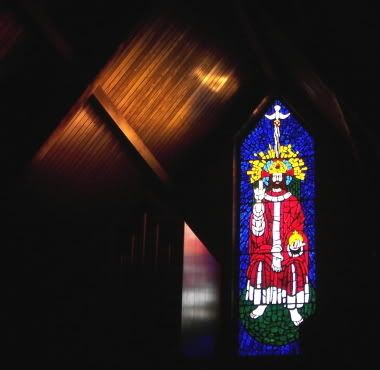
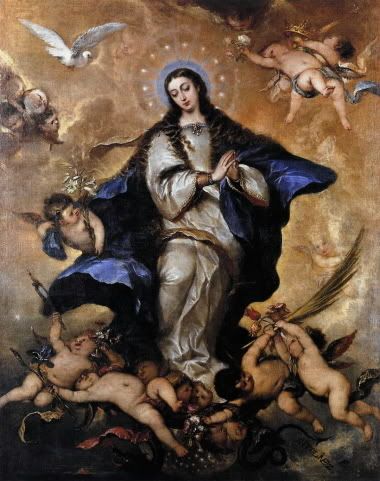
"I am the Immaculate Conception"

Photo Sharing and Video Hosting at Photobucket

Ineffabilis Deus
Apostolic Constitution of Pope Pius IX on the Immaculate Conception

God ineffable--whose ways are mercy and truth, whose will is omnipotence itself, and whose wisdom "reaches from end to end mightily, and orders all things sweetly"--having foreseen from all eternity the lamentable wretchedness of the entire human race which would result from the sin of Adam, decreed, by a plan hidden from the centuries, to complete the first work of his goodness by a mystery yet more wondrously sublime through the Incarnation of the Word. This he decreed in order that man who, contrary to the plan of Divine Mercy had been led into sin by the cunning malice of Satan, should not perish; and in order that what had been lost in the first Adam would be gloriously restored in the Second Adam. From the very beginning, and before time began, the eternal Father chose and prepared for his only-begotten Son a Mother in whom the Son of God would become incarnate and from whom, in the blessed fullness of time, he would be born into this world. Above all creatures did God so lover her that truly in her was the Father well pleased with singular delight. Therefore, far above all the angels and all the saints so wondrously did God endow her with the abundance of all heavenly gifts poured from the treasury of his divinity that this mother, ever absolutely free of all stain of sin, all fair and perfect, would possess that fullness of holy innocence and sanctity than which, under God, one cannot even imagine anything greater, and which, outside of God, no mind can succeed in comprehending fully.

SUPREME REASON FOR THE PRIVILEGE: THE DIVINE MATERNITY
And indeed it was wholly fitting that so wonderful a mother should be ever resplendent with the glory of most sublime holiness and so completely free from all taint of original sin that she would triumph utterly over the ancient serpent. To her did the Father will to give his only-begotten Son--the Son whom, equal to the Father and begotten by him, the Father loves from his heart--and to give this Son in such a way that he would be the one and the same common Son of God the Father and of the Blessed Virgin Mary. It was she whom the Son himself chose to make his Mother and it was from her that the Holy Spirit willed and brought it about that he should be conceived and born from whom he himself proceeds.

LITURGICAL ARGUMENT
The Catholic Church, directed by the Holy Spirit of God, is the pillar and base of truth and has ever held as divinely revealed and as contained in the deposit of heavenly revelation this doctrine concerning the original innocence of the august Virgin--a doctrine which is so perfectly in harmony with her wonderful sanctity and preeminent dignity as Mother of God--and thus has never ceased to explain, to teach and to foster this doctrine age after age in many ways and by solemn acts. From this very doctrine, flourishing and wondrously propagated in the Catholic world through the efforts and zeal of the bishops, was made very clear by the Church when she did not hesitate to present for the public devotion and veneration of the faithful the Feast of the Conception of the Blessed Virgin. By this most significant fact, the Church made it clear indeed that the conception of Mary is to be venerated as something extraordinary, wonderful, eminently holy, and different from the conception of all other human beings--for the Church celebrates only the feast days of the saints.

And hence the very words with which the Sacred Scriptures speak of Uncreated Wisdom and set forth his eternal origin, the Church, both in its ecclesiastical offices and in its liturgy, has been wont to apply likewise to the origin of the Blessed Virgin, inasmuch as God, by one and the same decree, had established the origin of Mary and the Incarnation of Divine Wisdom.

ORDINARY TEACHING OF THE ROMAN CHURCH
These truths, so generally accepted and put into practice by the faithful, indicate how zealously the Roman Church, mother and teacher of all Churches, has continued to teach this doctrine of the Immaculate Conception of the Virgin. Yet the more important actions of the Church deserve to be mentioned in detail. For such dignity and authority belong to the Church that she alone is the center of truth and of Catholic unity. It is the Church in which alone religion has been inviolably preserved and from which all other Churches must receive the tradition of the Faith.

The same Roman Church, therefore, desired nothing more than by the most persuasive means to state, to protect, to promote and to defend the doctrine of the Immaculate Conception. This fact is most clearly shown to the whole world by numerous and significant acts of the Roman Pontiffs, our predecessors. To them, in the person of the Prince of the Apostles, were divinely entrusted by Christ our Lord, the charge and supreme care and the power of feeding the lambs and sheep; in particular, of confirming their brethren, and of ruling and governing the universal Church.

VENERATION OF THE IMMACULATE
Our predecessors, indeed, by virtue of their apostolic authority, gloried in instituting the Feast of the Conception in the Roman Church. They did so to enhance its importance and dignity by a suitable Office and Mass, whereby the prerogative of the Virgin, her exception from the hereditary taint, was most distinctly affirmed. As to the homage already instituted, they spared no effort to promote and to extend it either by the granting of indulgences, or by allowing cities, provinces and kingdoms to choose as their patroness God's own Mother, under the title of "The Immaculate Conception." Again, our predecessors approved confraternities, congregations and religious communities founded in honor of the Immaculate Conception, monasteries, hospitals, altars, or churches; they praised persons who vowed to uphold with all their ability the doctrine of the Immaculate Conception of the Mother of God. Besides, it afforded the greatest joy to our predecessors to ordain that the Feast of the Conception should be celebrated in every church with the very same honor as the Feast of the Nativity; that it should be celebrated with an octave by the whole Church; that it should be reverently and generally observed as a holy day of obligation; and that a pontifical Capella should be held in our Liberian pontifical basilica on the day dedicated to the conception of the Virgin. Finally, in their desire to impress this doctrine of the Immaculate Conception of the Mother of God upon the hearts of the faithful, and to intensify the people's piety and enthusiasm for the homage and the veneration of the Virgin conceived without the stain of original sin, they delighted to grant, with the greatest pleasure, permission to proclaim the Immaculate Conception of the Virgin in the Litany of Loreto, and in the Preface of the Mass, so that the rule of prayer might thus serve to illustrate the rule of belief. Therefore, we ourselves, following the procedure of our predecessors, have not only approved and accepted what had already been established, but bearing in mind, moreover, the decree of Sixtus IV, have confirmed by our authority a proper Office in honor of the Immaculate Conception, and have with exceeding joy extended its use to the universal Church.

THE ROMAN DOCTRINE
Now inasmuch as whatever pertains to sacred worship is intimately connected with its object and cannot have either consistency or durability if this object is vague or uncertain, our predecessors, the Roman Pontiffs, therefore, while directing all their efforts toward an increase of the devotion to the conception, made it their aim not only to emphasize the object with the utmost zeal, but also to enunciate the exact doctrine. Definitely and clearly they taught that the feast was held in honor of the conception of the Virgin. They denounced as false and absolutely foreign to the mind of the Church the opinion of those who held and affirmed that it was not the conception of the Virgin but her sanctification that was honored by the Church. They never thought that greater leniency should be extended toward those who, attempting to disprove the doctrine of the Immaculate Conception of the Virgin, devised a distinction between the first and second instance of conception and inferred that the conception which the Church celebrates was not that of the first instance of conception but the second. In fact, they held it was their duty not only to uphold and defend with all their power the Feast of the Conception of the Blessed Virgin but also to assert that the true object of this veneration was her conception considered in its first instant. Hence the words of one of our predecessors, Alexander VII, who authoritatively and decisively declared the mind of the Church: "Concerning the most Blessed Virgin Mary, Mother of God, ancient indeed is that devotion of the faithful based on the belief that her soul, in the first instant of its creation and in the first instant of the soul's infusion into the body, was, by a special grace and privilege of God, in view of the merits of Jesus Christ, her Son and the Redeemer of the human race, preserved free from all stain of original sin. And in this sense have the faithful ever solemnized and celebrated the Feast of the Conception."

Moreover, our predecessors considered it their special solemn duty with all diligence, zeal, and effort to preserve intact the doctrine of the Immaculate Conception of the Mother of God. For, not only have they in no way ever allowed this doctrine to be censured or changed, but they have gone much further and by clear statements repeatedly asserted that the doctrine by which we profess the Immaculate Conception of the Virgin is on its own merits entirely in harmony with the ecclesiastical veneration; that it is ancient and widespread, and of the same nature as that which the Roman Church has undertaken to promote and to protect, and that it is entirely worthy to be used in the Sacred Liturgy and solemn prayers. Not content with this they most strictly prohibited any opinion contrary to this doctrine to be defended in public or private in order that the doctrine of the Immaculate Conception of the Virgin might remain inviolate. By repeated blows they wished to put an end to such an opinion. And lest these oft-repeated and clearest statements seem useless, they added a sanction to them.

PAPAL SANCTIONS
All these things our illustrious predecessor, Alexander VII, summed up in these words: "We have in mind the fact that the Holy Roman Church solemnly celebrated the Feast of the Conception of the undefiled and ever-Virgin Mary, and has long ago appointed for this a special and proper Office according to the pious, devout, and laudable instruction which was given by our predecessor, Sixtus IV. Likewise, we were desirous, after the example of our predecessors, to favor this praiseworthy piety, devotion, feast and veneration -- a veneration which is in keeping with the piety unchanged in the Roman Church from the day it was instituted. We also desired to protect this piety and devotion of venerating and extolling the most Blessed Virgin preserved from original sin by the grace of the Holy Spirit. Moreover, we were anxious to preserve the unity of the Spirit in the bond of peace in the flock of Christ by putting down arguments and controversies and by removing scandals. So at the instance and request of the bishops mentioned above, with the chapters of the churches, and of King Philip and his kingdoms, we renew the Constitutions and Decrees issued by the Roman Pontiffs, our predecessors, especially Sixtus IV, Paul V, and Gregory XV, in favor of the doctrine asserting that the soul of the Blessed Virgin, in its creation and infusion into the body, was endowed with the grace of the Holy Spirit and preserved from original sin; and also in favor of the feast and veneration of the conception of the Virgin Mother of God, which, as is manifest, was instituted in keeping with that pious belief. So we command this feast to be observed under the censures and penalties contained in the same Constitutions.

"And therefore, against all and everyone of those who shall continue to construe the said Constitutions and Decrees in a manner apt to frustrate the favor which is thereby given to the said doctrine, and to the feast and relative veneration, or who shall dare to call into question the said sentence, feast and worship, or in any way whatever, directly or indirectly, shall declare themselves opposed to it under any pretext whatsoever, were it but only to the extent of examining the possibilities of effecting the definition, or who shall comment upon and interpret the Sacred Scripture, or the Fathers or Doctors in connection therewith, or finally, for any reason, or on any occasion, shall dare, either in writing or verbally, to speak, preach, treat, dispute or determine upon, or assert whatsoever against the foregoing matters, or who shall adduce any arguments against them, while leaving them unresolved, or who shall disagree therewith in any other conceivable manner, we hereby declare that in addition to the penalties and censures contained in the Constitutions issued by Sixtus IV to which we want them to be subjected and to which we subject them by the present Constitution, we hereby decree that they be deprived of the authority of preaching, reading in public, that is to say teaching and interpreting; and that they be also deprived ipso facto of the power of voting, either actively or passively, in all elections, without the need for any further declaration; and that also, ipso facto, without any further declaration, they shall incur the penalty of perpetual disability from preaching, reading in public, teaching and interpreting, and that it shall not be possible to absolve them from such penalty, or remove it, save through ourselves, or the Roman Pontiffs who shall succeed us.

"We also require that the same shall remain subject to any other penalties which by us, of our own free will--or by the Roman Pontiffs, our successors (according as they may decree)--shall be deemed advisable to establish, and by the present Constitution we declare them subject thereto, and hereby renew the above Decrees and Constitutions of Paul V and Gregory XV.

"Moreover, as regards those books in which the said sentence, feast and relative veneration are called into question or are contradicted in any way whatsoever, according to what has already been stated, either in writing or verbally, in discourses, sermons, lectures, treatises and debates--that may have been printed after the above--praised Decree of Paul V, or may be printed hereafter we hereby prohibit them, subject to the penalties and censures established by the Index of prohibited books, and ipso facto, without any further declaration, we desire and command that they be held as expressly prohibited."

TESTIMONIES OF THE CATHOLIC WORLD
All are aware with how much diligence this doctrine of the Immaculate Conception of the Mother of God has been handed down, proposed and defended by the most outstanding religious orders, by the more celebrated theological academies, and by very eminent doctors in the sciences of theology. All know, likewise, how eager the bishops have been to profess openly and publicly, even in ecclesiastical assemblies, that Mary, the most holy Mother of God, by virtue of the foreseen merits of Christ, our Lord and Redeemer, was never subject to original sin, but was completely preserved from the original taint, and hence she was redeemed in a manner more sublime.

THE COUNCIL OF TRENT
Besides, we must note a fact of the greatest importance indeed. Even the Council of Trent itself, when it promulgated the dogmatic decree concerning original sin, following the testimonies of the Sacred Scriptures, of the Holy Fathers and of the renowned Council, decreed and defined that all men are born infected by original sin; nevertheless, it solemnly declared that it had no intention of including the blessed and immaculate Virgin Mary, the Mother of God, in this decree and in the general extension of its definition. Indeed, considering the times and circumstances, the Fathers of Trent sufficiently intimated by this declaration that the Blessed Virgin Mary was free from the original stain; and thus they clearly signified that nothing could be reasonably cited from the Sacred Scriptures, from Tradition, or from the authority of the Fathers, which would in any way be opposed to so great a prerogative of the Blessed Virgin.

TESTIMONIES OF TRADITION
And indeed, illustrious documents of venerable antiquity, of both the Eastern and the Western Church, very forcibly testify that this doctrine of the Immaculate Conception of the most Blessed Virgin, which was daily more and more splendidly explained, stated and confirmed by the highest authority, teaching, zeal, knowledge, and wisdom of the Church, and which was disseminated among all peoples and nations of the Catholic world in a marvelous manner--this doctrine always existed in the Church as a doctrine that has been received from our ancestors, and that has been stamped with the character of revealed doctrine. For the Church of Christ, watchful guardian that she is, and defender of the dogmas deposited with her, never changes anything, never diminishes anything, never adds anything to them; but with all diligence she treats the ancient documents faithfully and wisely; if they really are of ancient origin and if the faith of the Fathers has transmitted them, she strives to investigate and explain them in such a way that the ancient dogmas of heavenly doctrine will be made evident and clear, but will retain their full, integral, and proper nature, and will grow only within their own genus--that is, within the same dogma, in the same sense and the same meaning.

INTERPRETERS OF THE SACRED SCRIPTURE
The Fathers and writers of the Church, well versed in the heavenly Scriptures, had nothing more at heart than to vie with one another in preaching and teaching in many wonderful ways the Virgin's supreme sanctity, dignity, and immunity from all stain of sin, and her renowned victory over the most foul enemy of the human race. This they did in the books they wrote to explain the Scriptures, to vindicate the dogmas, and to instruct the faithful. These ecclesiastical writers in quoting the words by which at the beginning of the world God announced his merciful remedies prepared for the regeneration of mankind--words by which he crushed the audacity of the deceitful serpent and wondrously raised up the hope of our race, saying, "I will put enmities between you and the woman, between your seed and her seed"--taught that by this divine prophecy the merciful Redeemer of mankind, Jesus Christ, the only begotten Son of God, was clearly foretold: That his most Blessed Mother, the Virgin Mary, was prophetically indicated; and, at the same time, the very enmity of both against the evil one was significantly expressed. Hence, just as Christ, the Mediator between God and man, assumed human nature, blotted the handwriting of the decree that stood against us, and fastened it triumphantly to the cross, so the most holy Virgin, united with him by a most intimate and indissoluble bond, was, with him and through him, eternally at enmity with the evil serpent, and most completely triumphed over him, and thus crushed his head with her immaculate foot.

This sublime and singular privilege of the Blessed Virgin, together with her most excellent innocence, purity, holiness and freedom from every stain of sin, as well as the unspeakable abundance and greatness of all heavenly graces, virtues and privileges -- these the Fathers beheld in that ark of Noah, which was built by divine command and escaped entirely safe and sound from the common shipwreck of the whole world; in the ladder which Jacob saw reaching from the earth to heaven, by whose rungs the angels of God ascended and descended, and on whose top the Lord himself leaned' in that bush which Moses saw in the holy place burning on all sides, which was not consumed or injured in any way but grew green and blossomed beautifully; in that impregnable tower before the enemy, from which hung a thousand bucklers and all the armor of the strong; in that garden enclosed on all sides, which cannot be violated or corrupted by any deceitful plots; as in that resplendent city of God, which has its foundations on the holy mountains; in that most august temple of God, which, radiant with divine splendors, is full of the glory of God; and in very many other biblical types of this kind. In such allusions the Fathers taught that the exalted dignity of the Mother of God, her spotless innocence and her sanctity unstained by any fault, had been prophesied in a wonderful manner.

In like manner did they use the words of the prophets to describe this wondrous abundance of divine gifts and the original innocence of the Virgin of whom Jesus was born. They celebrated the august Virgin as the spotless dove, as the holy Jerusalem, as the exalted throne of God, as the ark and house of holiness which Eternal Wisdom built, and as that Queen who, abounding in delights and leaning on her Beloved, came forth from the mouth of the Most High, entirely perfect, beautiful, most dear to God and never stained with the least blemish.

THE ANNUNCIATION
When the Fathers and writers of the Church meditated on the fact that the most Blessed Virgin was, in the name and by order of God himself, proclaimed full of grace by the Angel Gabriel when he announced her most sublime dignity of Mother of God, they thought that this singular and solemn salutation, never heard before, showed that the Mother of God is the seat of all divine graces and is adorned with all gifts of the Holy Spirit. To them Mary is an almost infinite treasury, an inexhaustible abyss of these gifts, to such an extent that she was never subject to the curse and was, together with her Son, the only partaker of perpetual benediction. Hence she was worthy to hear Elizabeth, inspired by the Holy Spirit, exclaim: "Blessed are you among women, and blessed is the fruit of your womb."

MARY COMPARED WITH EVE
Hence, it is the clear and unanimous opinion of the Fathers that the most glorious Virgin, for whom "he who is mighty has done great things," was resplendent with such an abundance of heavenly gifts, with such a fullness of grace and with such innocence, that she is an unspeakable miracle of God--indeed, the crown of all miracles and truly the Mother of God; that she approaches as near to God himself as is possible for a created being; and that she is above all men and angels in glory. Hence, to demonstrate the original innocence and sanctity of the Mother of God, not only did they frequently compare her to Eve while yet a virgin, while yet innocence, while yet incorrupt, while not yet deceived by the deadly snares of the most treacherous serpent; but they have also exalted her above Eve with a wonderful variety of expressions. Eve listened to the serpent with lamentable consequences; she fell from original innocence and became his slave. The most Blessed Virgin, on the contrary, ever increased her original gift, and not only never lent an ear to the serpent, but by divinely given power she utterly destroyed the force and dominion of the evil one.

BIBLICAL FIGURES
Accordingly, the Fathers have never ceased to call the Mother of God the lily among thorns, the land entirely intact, the Virgin undefiled, immaculate, ever blessed, and free from all contagion of sin, she from whom was formed the new Adam, the flawless, brightest, and most beautiful paradise of innocence, immortality and delights planted by God himself and protected against all the snares of the poisonous serpent, the incorruptible wood that the worm of sin had never corrupted, the fountain ever clear and sealed with the power of the Holy Spirit, the most holy temple, the treasure of immortality, the one and only daughter of life--not of death--the plant not of anger but of grace, through the singular providence of God growing ever green contrary to the common law, coming as it does from a corrupted and tainted root.

EXPLICIT AFFIRMATION . . .
As if these splendid eulogies and tributes were not sufficient, the Fathers proclaimed with particular and definite statements that when one treats of sin, the holy Virgin Mary is not even to be mentioned; for to her more grace was given than was necessary to conquer sin completely. They also declared that the most glorious Virgin was Reparatrix of the first parents, the giver of life to posterity; that she was chosen before the ages, prepared for himself by the Most High, foretold by God when he said to the serpent, "I will put enmities between you and the woman."--unmistakable evidence that she crushed the poisonous head of the serpent. And hence they affirmed that the Blessed Virgin was, through grace, entirely free from every stain of sin, and from all corruption of body, soul and mind; that she was always united with God and joined to him by an eternal covenant; that she was never in darkness but always in light; and that, therefore, she was entirely a fit habitation for Christ, not because of the state of her body, but because of her original grace.

. . . OF A SUPEREMINENT SANCTITY
To these praises they have added very noble words. Speaking of the conception of the Virgin, they testified that nature yielded to grace and, unable to go on, stood trembling. The Virgin Mother of God would not be conceived by Anna before grace would bear its fruits; it was proper that she be conceived as the first-born, by whom "the first-born of every creature" would be conceived. They testified, too, that the flesh of the Virgin, although derived from Adam, did not contract the stains of Adam, and that on this account the most Blessed Virgin was the tabernacle created by God himself and formed by the Holy Spirit, truly a work in royal purple, adorned and woven with gold, which that new Beseleel made. They affirmed that the same Virgin is, and is deservedly, the first and especial work of God, escaping the fiery arrows the evil one; that she is beautiful by nature and entirely free from all stain; that at her Immaculate Conception she came into the world all radiant like the dawn. For it was certainly not fitting that this vessel of election should be wounded by the common injuries, since she, differing so much from the others, had only nature in common with them, not sin. In fact, it was quite fitting that, as the Only-Begotten has a Father in heaven, whom the Seraphim extol as thrice holy, so he should have a Mother on earth who would never be without the splendor of holiness.

This doctrine so filled the minds and souls of our ancestors in the faith that a singular and truly marvelous style of speech came into vogue among them. They have frequently addressed the Mother of God as immaculate, as immaculate in every respect; innocent, and verily most innocent; spotless, and entirely spotless; holy and removed from every stain of sin; all pure, all stainless, the very model of purity and innocence; more beautiful than beauty, more lovely than loveliness; more holy than holiness, singularly holy and most pure in soul and body; the one who surpassed all integrity and virginity; the only one who has become the dwelling place of all the graces of the most Holy Spirit. God alone excepted, Mary is more excellent than all, and by nature fair and beautiful, and more holy than the Cherubim and Seraphim. To praise her all the tongues of heaven and earth do not suffice.

Everyone is cognizant that this style of speech has passed almost spontaneously into the books of the most holy liturgy and the Offices of the Church, in which they occur so often and abundantly. In them, the Mother of God is invoked and praised as the one spotless and most beautiful dove, as a rose ever blooming, as perfectly pure, ever immaculate, and ever blessed. She is celebrated as innocence never sullied and as the second Eve who brought forth the Emmanuel.

PREPARATION FOR THE DEFINITION
No wonder, then, that the Pastors of the Church and the faithful gloried daily more and more in professing with so much piety, religion, and love this doctrine of the Immaculate Conception of the Virgin Mother of God, which, as the Fathers discerned, was recorded in the Divine Scriptures; which was handed down in so many of their most important writings; which was expressed and celebrated in so many illustrious monuments of venerable antiquity; which was proposed and confirmed by the official and authoritative teaching of the Church. Hence, nothing was dearer, nothing more pleasing to these pastors than to venerate, invoke, and proclaim with most ardent affection the Virgin Mother of God conceived without original stain. Accordingly, from ancient times the bishops of the Church, ecclesiastics, religious orders, and even emperors and kings, have earnestly petitioned this Apostolic See to define a dogma of the Catholic Faith the Immaculate Conception of the most holy Mother of God. These petitions were renewed in these our own times; they were especially brought to the attention of Gregory XVI, our predecessor of happy memory, and to ourselves, not only by bishops, but by the secular clergy and religious orders, by sovereign rulers and by the faithful.

Mindful, indeed, of all these things and considering them most attentively with particular joy in our heart, as soon as we, by the inscrutable design of Providence, had been raised to the sublime Chair of St. Peter--in spite of our unworthiness--and had begun to govern the universal Church, nothing have we had more at heart--a heart which from our tenderest years has overflowed with devoted veneration and love for the most Blessed Virgin--than to show forth her prerogatives in resplendent light.

That we might proceed with great prudence, we established a special congregation of our venerable brethren, the cardinals of the holy Roman Church, illustrious for their piety, wisdom, and knowledge of the sacred scriptures. We also selected priests, both secular and regular, well trained in the theological sciences, that they should most carefully consider all matters pertaining to the Immaculate Conception of the Virgin and make known to us their opinion.

THE MIND OF THE BISHOPS
Although we knew the mind of the bishops from the petitions which we had received from them, namely, that the Immaculate Conception of the Blessed Virgin be finally defined, nevertheless, on February 2, 1849, we sent an Encyclical Letter from Gaeta to all our venerable brethren, the bishops of the Catholic world, that they should offer prayers to God and then tell us in writing what the piety and devotion of their faithful was in regard to the Immaculate Conception of the Mother of God. We likewise inquired what the bishops themselves thought about defining this doctrine and what their wishes were in regard to making known with all possible solemnity our supreme judgment.

We were certainly filled with the greatest consolation when the replies of our venerable brethren came to us. For, replying to us with a most enthusiastic joy, exultation and zeal, they not only again confirmed their own singular piety toward the Immaculate Conception of the most Blessed Virgin, and that of the secular and religious clergy and of the faithful, but with one voice they even entreated us to define our supreme judgment and authority the Immaculate Conception of the Virgin. In the meantime we were indeed filled with no less joy when, after a diligent examination, our venerable brethren, the cardinals of the special congregation and the theologians chosen by us as counselors (whom we mentioned above), asked with the same enthusiasm and fervor for the definition of the Immaculate Conception of the Mother of God.

Consequently, following the examples of our predecessors, and desiring to proceed in the traditional manner, we announced and held a consistory, in which we addressed our brethren, the cardinals of the Holy Roman Church. It was the greatest spiritual joy for us when we heard them ask us to promulgate the dogmatic definition of the Immaculate Conception of the Virgin Mother of God.

Therefore, having full trust in the Lord that the opportune time had come for defining the Immaculate Conception of the Blessed Virgin Mary, Mother of God, which Holy Scripture, venerable Tradition, the constant mind of the Church, the desire of Catholic bishops and the faithful, and the memorable Acts and Constitutions of our predecessors, wonderfully illustrate and proclaim, and having most diligently considered all things, as we poured forth to God ceaseless and fervent prayers, we concluded that we should no longer delay in decreeing and defining by our supreme authority the Immaculate Conception of the Blessed Virgin. And thus, we can satisfy the most holy desire of the Catholic world as well as our own devotion toward the most holy Virgin, and at the same time honor more and more the only begotten Son, Jesus Christ our Lord through his holy Mother--since whatever honor and praise are bestowed on the Mother redound to the Son.

THE DEFINITION
Wherefore, in humility and fasting, we unceasingly offered our private prayers as well as the public prayers of the Church to God the Father through his Son, that he would deign to direct and strengthen our mind by the power of the Holy Spirit. In like manner did we implore the help of the entire heavenly host as we ardently invoked the Paraclete. Accordingly, by the inspiration of the Holy Spirit, for the honor of the Holy and undivided Trinity, for the glory and adornment of the Virgin Mother of God, for the exaltation of the Catholic Faith, and for the furtherance of the Catholic religion, by the authority of Jesus Christ our Lord, of the Blessed Apostles Peter and Paul, and by our own:

We declare, pronounce, and define that the doctrine which holds that the most Blessed Virgin Mary, in the first instance of her conception, by a singular grace and privilege granted by Almighty God, in view of the merits of Jesus Christ, the Savior of the human race, was preserved free from all stain of original sin, is a doctrine revealed by God and therefore to be believed firmly and constantly by all the faithful.

[Declaramus, pronuntiamus et definimus doctrinam quae tenet beatissimam Virginem Mariam in primo instanti suae conceptionis fuisse singulari Omnipotentis Dei gratia et privilegio, intuitu meritorum Christi Jesu Salvatoris humani generis, ab omni originalis culpae labe praeservatam immunem, esse a Deo revelatam, atque idcirco ab omnibus fidelibus firmiter constanterque credendam.]

Hence, if anyone shall dare--which God forbid!--to think otherwise than as has been defined by us, let him know and understand that he is condemned by his own judgment; that he has suffered shipwreck in the faith; that he has separated from the unity of the Church; and that, furthermore, by his own action he incurs the penalties established by law if he should dare to express in words or writing or by any other outward means the errors he thinks in his heart.

HOPED-FOR RESULTS
Our soul overflows with joy and our tongue with exultation. We give, and we shall continue to give, the humblest and deepest thanks to Jesus Christ, our Lord, because through his singular grace he has granted to us, unworthy though we be, to decree and offer this honor and glory and praise to his most holy Mother. All our hope do we repose in the most Blessed Virgin--in the all fair and immaculate one who has crushed the poisonous head of the most cruel serpent and brought salvation to the world: in her who is the glory of the prophets and apostles, the honor of the martyrs, the crown and joy of all the saints; in her who is the safest refuge and the most trustworthy helper of all who are in danger; in her who, with her only-begotten Son, is the most powerful Mediatrix and Conciliatrix in the whole world; in her who is the most excellent glory, ornament, and impregnable stronghold of the holy Church; in her who has destroyed all heresies and snatched the faithful people and nations from all kinds of direst calamities; in her do we hope who has delivered us from so many threatening dangers. We have, therefore, a very certain hope and complete confidence that the most Blessed Virgin will ensure by her most powerful patronage that all difficulties be removed and all errors dissipated, so that our Holy Mother the Catholic Church may flourish daily more and more throughout all the nations and countries, and may reign "from sea to sea and from the river to the ends of the earth," and may enjoy genuine peace, tranquility and liberty. We are firm in our confidence that she will obtain pardon for the sinner, health for the sick, strength of heart for the weak, consolation for the afflicted, help for those in danger; that she will remove spiritual blindness from all who are in error, so that they may return to the path of truth and justice, and that here may be one flock and one shepherd.

Let all the children of the Catholic Church, who are so very dear to us, hear these words of ours. With a still more ardent zeal for piety, religion and love, let them continue to venerate, invoke and pray to the most Blessed Virgin Mary, Mother of God, conceived without original sin. Let them fly with utter confidence to this most sweet Mother of mercy and grace in all dangers, difficulties, needs, doubts and fears. Under her guidance, under her patronage, under her kindness and protection, nothing is to be feared; nothing is hopeless. Because, while bearing toward us a truly motherly affection and having in her care the work of our salvation, she is solicitous about the whole human race. And since she has been appointed by God to be the Queen of heaven and earth, and is exalted above all the choirs of angels and saints, and even stands at the right hand of her only-begotten Son, Jesus Christ our Lord, she presents our petitions in a most efficacious manner. What she asks, she obtains. Her pleas can never be unheard.

Given at St. Peter's in Rome, the eighth day of December, 1854, in the eighth year of our pontificate.

PIVS IX

Wednesday, December 05, 2007

The way liturgy should be


The video above is a recording of the 2007 Corpus Christi Mass from S Clement's Episcopal Church in Philadelphia. This segment is of the opening hymn and introit. Other segments can be viewed here (with more to follow, including a DVD of the whole liturgy). Many thanks to the people who made this possible. It is a valuable ministry to the wider church.

Wednesday, November 28, 2007

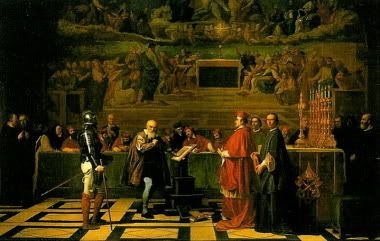
Debunking the Galileo myth

Photo Sharing and Video Hosting at Photobucket
Dinesh D'Souza has a wonderful new column debunking some of the myths about a supposed conflict between science and religion (particularly, Christianity). He begins:

Many people have uncritically accepted the idea that there is a longstanding war between science and religion. We find this war advertised in many of the leading atheist tracts such as those by Richard Dawkins, Victor Stenger, Sam Harris, and Christopher Hitchens. Every few months one of the leading newsweeklies does a story on this subject. Little do the peddlers of this paradigm realize that they are victims of nineteenth-century atheist propaganda.

About a hundred years ago, two anti-religious bigots named John William Draper and Andrew Dickson White wrote books promoting the idea of an irreconcilable conflict between science and God. The books were full of facts that have now been totally discredited by scholars. But the myths produced by Draper and Dickson continue to be recycled. They are believed by many who consider themselves educated, and they even find their way into the textbooks. In this article I expose several of these myths, focusing especially on the Galileo case, since Galileo is routinely portrayed as a victim of religious persecution and a martyr to the cause of science.

Click here to read the whole article. The science/religion myths D'Souza addresses are:

The Flat Earth Fallacy.
Huxley’s Mythical Put-Down.
Darwin Against the Christians.
The Experiment Galileo Didn’t Do.
Galileo Was the First to Prove Heliocentrism.
The Church Dogmatically Opposed the New Science.
Galileo Was A Victim of Torture and Abuse.
The Church Was Wrong To Convict Galileo of Heresy.

D'Souza closes his column by noting:

Historian Gary Ferngren concludes that “the traditional picture of Galileo as a martyr to intellectual freedom and as a victim of the church’s opposition to science has been demonstrated to be little more than a caricature.” Remember this the next time you hear some half-educated atheist rambling on about “the war between religion and science.”

Tuesday, November 27, 2007

King of kings and Lord of lords

Photo Sharing and Video Hosting at Photobucket
A sermon for Proper 29, given at St Alban's on November 25, 2007.

In 1925, Pope Pius XI established the feast of “Christ the King” to be celebrated on the last Sunday of October throughout the Western Church. The object of that new celebration was to reassert the authority of our Lord to rule all the nations as well as the authority of Christ’s mystical Body, the Church, to teach the human race, to proclaim Christ crucified, and to call people to repentance and so “establish the peace of Christ in the kingdom of Christ.”

While Christmas and the Epiphany highlighted themes of the royalty of Jesus, this feast was to focus sharply and exclusively on the reign of Christ. When the lectionary was being revised for the Missal of Pope Paul VI in the 1960s, other churches were engaged in a similar effort and formulated together a three year cycle of Sunday readings. It was understood that each season had a theme: Advent is a time of preparation for Christ’s coming, Christmas is a celebration of the Incarnation, Epiphany explores the manifestation of Christ to the world, Lent is a time of penitence, Holy Week and Easter explore the great mysteries of our redemption and Christ’s triumph over sin and death.

It was also recognized that the long seasonless period of readings through the summer also developed some related themes in its collects and readings. It is a time of the Church’s growth and learning. The readings are mainly from Christ’s teachings in the parables. Toward the end of the liturgical year, there is an increasing focus on the kingdom of heaven, the saints, and the afterlife. It seemed fitting to close the Christian year with a celebration of the lordship of Christ, especially as the end of the year leads into the Advent theme of his second coming in glorious majesty as judge and lord of all. In our Prayer Book, the last Sunday of the Church year is not an official feast day, but “Christ the King” is definitely the theme of the collect and readings.

There is a clear agreement in the gospel records that the kingdom of God was the main theme of Jesus’ message and the focus of his theological discourse. The kingdom is not a new idea for the scriptures, however. The Old Testament is filled with the notion that God is king and lord of the universe, and that he wishes to rule the lives of his faithful people. Though the Bible speaks often of God as reigning over all the earth, sea, and sky, it should be remembered that the Hebrew concept of kingdom refers more to the force of rule that it does to a territory known as a kingdom.

That concept is even taken at first to exclude the possibility of earthly kings for God's people. Hence the period of the judges is the story of Israel’s struggle with practical government in the absence of an earthly king. It required the direction of God through the prophet Samuel to anoint an earthly king—a man to act as God’s royal proxy. And yet, the fact of an earthly king was properly seen as a part of God’s cosmic dominion. And even though God is presently the King of the entire universe, the eschatological hope for Israel was that his lordship would be further and further revealed until all the nation would finally come to submit to his gracious rule. The messiah was to be the final and perfect king—the one to exercise that perfect rule over all nations and all peoples, to show clearly that God reigns on earth, just as he does in heaven.

Last year, I taught a class on the book of Revelation. One of the key sections is chapter 4-5, when there is an open door in heaven, and St John gets to look inside. He sees God seated on the throne of heaven, surrounded by the patriarchs of Israel, with serafim and cherubim, and a myriad of the heavenly host, bowing down before him and joining in the endless hymn of praise: “Holy, holy, holy is the Lord God of Hosts.”

Everything is exactly in line with first century Jewish expectations of heaven. But now, something completely different. An angel cries out to creation, asking who is worthy to open the seals of the book of destiny. No one is worthy, and John begins to weep. Then one of the elders says, Do not weep. The Lion of the tribe of Judah, the Root of David has conquered, and he is worthy to open it. To the scroll comes a lamb—a slain lamb, though now standing, and now invested with all power and authority. The hosts of heaven begin a new song: “Worthy is the Lamb who was slain to receive power and riches and wisdom, and strength and honor, and glory, and blessing! . . . Blessing and honor and glory and power be to him who sits upon the throne and to the Lamb, for ever and ever!”

It was something that no one had expected—God’s messiah had conquered creation as a helpless sacrificial lamb, and the Lamb now reigns in glory. Christ conquered sin, and death, and hell for the kingdom at the cross. As we read in St. Paul’s first letter to the Corinthians, “Then comes the end, when he delivers the kingdom to God the Father after destroying every rule and every authority and power. For he must reign until he has put all his enemies under his feet. The last enemy to be destroyed is death.” Who would have thought it would end this way?

The one constant pressure Jesus faced in his ministry—from his temptations in the desert up until his crucifixion, was to claim an earthly throne: to begin a revolt, root out Roman occupation, and restore the Davidic kingdom of Israel, just as the Maccabees struggled to do to their Greek oppressors a century before. But Jesus always refused.

When the Romans crucified a prisoner, there was normally a placard over the head of the prisoner, noting the crime for which he was being executed. Crucifixion was not simply about getting the job done of execution, nor even so much about being cruel, it served a fearful reminder and a warning to everyone who passed by and saw. It says, “This is what happens to people who do this.” For if Jesus is Lord, then Caesar is not.

Certainly the two thieves crucified next to Jesus had this placard noting their crimes. For Jesus this wooden sign, called the titulus, had written upon it: “Jesus of Nazareth, King of the Jews”—in Hebrew, Latin, and Greek. Those who had brought Jesus to Pilate complained, “It should say, This man said, I am the King of the Jews.” But either because it was too much of a bother to change it now, or perhaps because Pilate wanted to through it back in their faces a little bit for forcing him get involved in this local mess, he responded, “What I have written, I have written.”

And so there, on a lonely hill outside Jerusalem, our Lord and Savior at last willingly claimed his throne, wore a crown of thorns, and was raised up high before the crowd of subjects, nailed to a beam of wood which bore the sign: Jesus of Nazareth, King of the Jews.

It was not to long before that dreadful day that Jesus had spoken of the event: “When the Son of Man is lifted up [on the cross], then you will know that I AM.” His first royal edict is to make our peace through the blood of his cross. All dominion and authority in heaven and earth belongs to him. And Christ has made all who have faith in him and bear his name to be heirs and joint-heirs of that kingdom. Jesus is the King of all creation, Lord of the cosmos, he has rightful claim to all things. But Jesus does not force anyone to belong to that kingdom against their will. He has conquered sin and death, but the territory of the heart must be willingly surrendered to him as Savior and Lord. Surrender to him anew every day as lord of your life, even the darkest corners. Let everything be his; carve out no territory for yourself alone.

All that Jesus reigns over will be ushered into his everlasting and glorious kingdom, it will be redeemed and renewed and become part of his new creation. All that is left unsurrendered will be cast into the fire. If you are carving out a territory for yourself, it will be lost. Jesus stands at the cross, his arms are open in love, beckoning you and all people to enter the gates of the kingdom of God, saying, “Come, O blessed of my Father, inherit the kingdom prepared for you from the foundation of the world.”

When the Feast of Christ the King was established in 1925, a new preface for the Eucharistic prayer was composed to be used on that occasion. As we pray together now, open up your eyes to see the Lord Jesus, the slain Lamb of God, now reigning triumphant on the cross, open your ears to hear his word and his call of faith, and open your hearts to welcome him to reign in you.

Let us pray.
It is right and a good and joyful thing always and everywhere to give thanks to you, O Lord, holy Father, Almighty and everlasting God, who anointed your only begotten Son, Jesus Christ our Lord with the oil of gladness to be a priest forever and king of the whole world, so that by offering himself on the altar of the cross as a pure victim and peace offering, he might perform the sacrificial rite of mankind’s redemption. All creation thereby has been made subject to his dominion, that he might present to your infinite majesty a universal and everlasting kingdom—a kingdom of truth and of life, of holiness and of grace, a kingdom of justice, of love, and of peace. Amen.

Friday, November 23, 2007

The one we've all been waiting for

Photo Sharing and Video Hosting at Photobucket
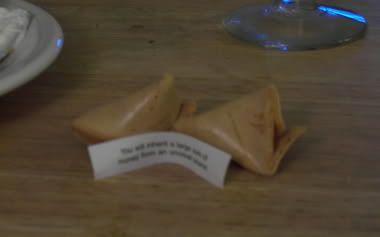
Melisa and I got Chinese food today. I couldn't believe the fortune cookie. I took a picture (but it was hard to get it to focus). The message inside mine read "You will inherit a large sum of money from an unusual source." If that weren't enough, Melisa's message read, "Be prepared to receive something special with no strings attached."

I don't expect anything, of course. But I thought it was interesting. And I can't remember the last time my message in the fortune cookie had an actual prediction rather than some proverbial word of advice. I just hope if it does come true, it's not some kind of Twilight Zone kind of fulfillment--like a bomb goes off at the family reunion or something.

Thursday, November 22, 2007

A Thanksgiving turkey

Photo Sharing and Video Hosting at Photobucket
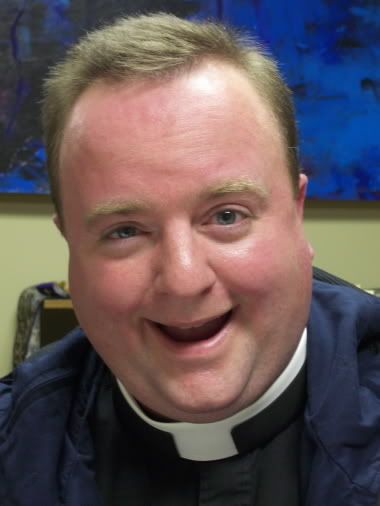
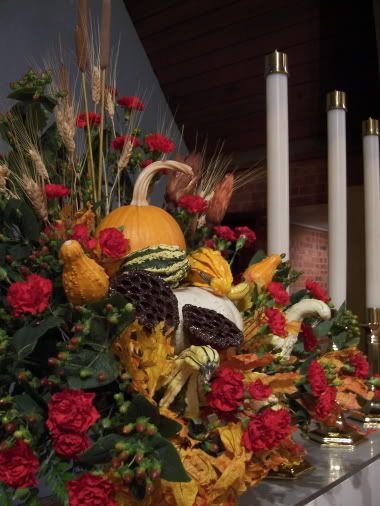
Here I am doing my best turkey impression, gleeful after his presidential pardon, after our Thanksgiving Eve Mass at St Alban's. It was a lovely occasion. And even more lovely was the special autumn flower arrangement below. I had to take a picture to share.
Photo Sharing and Video Hosting at Photobucket
Speaking of impressions, Melisa and I watched the premiere of Frank Caliendo's Frank TV today on TBS. The episode was appropriately called "Franksgiving." I think he's one of the best impressionist/ comedians I've ever seen. Here is his appearance on David Letterman.

Tuesday, November 20, 2007

"It is a time for grace"

Photo Sharing and Video Hosting at Photobucket

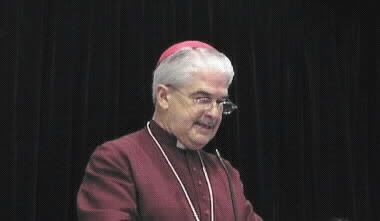
Here are some of my favorite excerpts from the bishop's address to the 25th Annual Convention of the Diocese of Fort Worth last Saturday:

"I would like to set the tone for our deliberations today by beginning with a quote from St. Paul the Apostle in the 16th chapter of his First Letter to the Corinthians: 'Be watchful, stand firm in your faith, be courageous, be strong. Let all that you do be done in love.' (I Corinthians 16:13-14) What a wonderful text to guide and direct us as we debate the proposals that are before this Convention."

"Let our 'yes' be 'yes,' and let our 'no' be 'no,' not a garbled yes and no at the same time. Let us not lose our will to stand for conscience and truth, whatever the consequences or the cost. Dare to be a Daniel! Dare to stand alone, if need be! But we are not alone; we are together."

"Let our courage and boldness be expressed in love for all sinners, love for those who threaten us, showing the sacrificial love of Jesus for a fallen world and for all people, created in the image of God. Let us speak the truth in love, not seeking revenge or harm to anyone, but only the glory of God, the building up of the Body of Christ, and the extension of Christ’s kingdom in the world. Pray God that our debates and decisions this day may be marked by the love of Jesus Christ. The Apostle Paul reminds us: 'Love is patient and kind; love is not jealous or boastful; it is not arrogant or rude. Love does not insist on its own way; it is not irritable or resentful; it does not rejoice at wrong, but rejoices in the right. Love bears all things, believes all things, hopes all things, endures all things.' (I Corinthians 13:4-7) Whatever comes of our decisions today, let us debate in love, decide in love, and deal with one another in love, as we face the consequences of choices we must make."

"It is my fervent hope that no parish will elect to pursue this course and that we will remain together in mission for the next 25 years and beyond. But if separation must come, let it be accomplished without rancor and litigation. Let it be done in a Godly manner, in charity and in peace. Let it be a parting of brothers and sisters in Christ. On numerous occasions, I have said that I cannot make anyone leave the Episcopal Church, nor can I make anyone stay in the Episcopal Church. This is a very difficult time for all of us, and it does not help to demonize one another or to attack the integrity or motives of those who disagree with us. It is not a time for threats, intimidation, or coercion. It is a time for grace, cooperation, and mutual respect. The multiple lawsuits that have been filed across the United States by The Episcopal Church against good Christian people over the ownership of their church property are outrageous. It is a scandal to the Body of Christ, and it must stop! This is not the way Christians deal with one another."

"Tomorrow morning, after our votes have been cast today, your local church will remain unchanged. You will have the same priest, same building, same Prayer Book, and all the rest, that you had last Sunday. And I would like to say a word of reassurance to all of you, if I may, that this also will be the most likely scenario next year, following a possible ratification vote on any proposals that we adopt on first reading today. Your church and your priest will still be there for you and your family. The liturgy and worship in your congregation will continue as it has in years past, edifying the faithful and giving glory to God. Any and all who wish to join us will still be warmly welcomed, and we will continue to reach out to the world about us in evangelism and witness to the saving Gospel of Jesus Christ. Do not be fearful; trust God to provide. Do not vote today out of fear, but out of conviction, in confidence and in faith."

"From time to time someone will ask, 'Why don’t you just resign and go away and join some other church where you will be happy?' My reply is always the same; because I cannot forsake the faithful people of this Diocese. I cannot renounce the sacred vows I took when I was called by God to serve as your Bishop. I will not desert the flock that has called me to shepherd them in this Diocese. I will not cease to guard the faith. I will not forsake those who look to me for spiritual leadership and guidance. As Jesus himself said, it is the hireling who, when he sees the wolf coming, runs away and abandons the sheep. The good shepherd remains to defend and lead the sheep entrusted to his protection and care. I am not going to abandon the faithful of this Diocese in the midst of the assaults and threats being hurled at us for standing up for what we believe. The controversies and divisions that confront us are not about me or about my role as Bishop. They are about the truth of the Gospel, the authority of the Bible, and the received teachings of the apostolic Church."

"My dream is for a day when we are not under attack by adversaries from within the same church or engulfed in endless religious controversies. I long to be a part of a Province that wants us and values our witness, instead of threatening us and isolating us as a 'problem diocese.' My hope is for a time when we are not sidetracked from the mission of the Church by endless conflicts, so that we can be truly set free to focus on making disciples, planting new churches, building up the Body, equipping the saints for ministry, encouraging the faithful, and doing the work of Jesus Christ in the world. May God in His goodness hasten the arrival of such a day, such a time, and such a Church."

You can read the entire text here, or watch the video on Anglican TV.

Read, mark, learn, and inwardly digest

A sermon for Yr C, Proper 28, given at St Alban's on November 18, 2007.

Someone once called the Bible “a book of remembrance.” This is perhaps as apt a definition of Scripture as we shall find, for each time we read Scripture we recall the wondrous things that the Lord has done among those who have revered him (and among those who have not).

The remembrance of these things brings promise and reassurance to us today, translating our own ordinary experience into an astonishing story of God’s providence and grace. The Bible has the power to transform us in the here and now, and to change who we are to become. In a unique way, the Holy Scriptures lay a sacred claim upon us and our lives. Heraclites, an ancient Greek philosopher, declared that you cannot step into the same river twice. In a similar way, each reading of God’s word is ever new. Like the river, each time we step in, it is always fresh; it always has a little more to teach us.

Paradoxically, this book of remembrance, is not about the past. What we remember most as we read it are the promises of things to come. It is not surprising that God’s Word keeps challenging and renewing us. The Word is still being written in us—upon the tablet of our hearts. It has the power to become our own spiritual biography.

St. Paul wrote to the Church in Rome, “Whatsoever things were written aforetime were written for our learning, that through patience and comfort of the scripture we might have hope" (Romans 15:4). That beautiful collect, we used today picks up on the sentiment of Paul’s verse. Today, we call upon the same Lord “who caused all holy Scriptures to be written for our learning.” We pray that we might “hear them, read, mark, learn, and inwardly digest them.”

Note that the first four don’t mean very much without the last petition. The great skeptic and atheistic philosopher Voltaire studied the scriptures, even marked and learnt them, but obviously did not inwardly digest them. The compromised German Christians Movement of the Nazi era studied the scriptures, but did not inwardly digest them.

After much study and prayer, we pray that we may inwardly digest Scripture’s message by being nourished and transformed by the sacred text. For God’s Word is not unlike the manna of the Old Testament. It is food for the journey, sustenance for the soul. Each day it is there for us once again. Everyday it is just enough, yet never exhausted. If not gathered, consumed, and inwardly digested, like the manna, its words become stale and useless to us—words in a dusty old book on a shelf, incapable of satisfying any hunger in the soul.

But if we hear Scripture, read, mark, learn, and inwardly digest its message day by day, week by week, and year by year, we shall never go hungry. If you understand that, you know the real purpose of Scripture. The guiding words of the Bible will nourish you and make you strong both to know the will of God and (more importantly) to follow it. This Thanksgiving, consider how the Scriptures may be our food for the journey.

When we look carefully at this jewel of the Church’s treasury, we discover that we can read the Bible to three main ends: for information, for inspiration, and for transformation.

We first read the Bible for information. Most Bible studies, both academic and devotional, are concerned with reading the Bible for information—which is an important thing. The stories in the Bible are stories of real people, in a different time and place to be sure, yet who share many of the basic experiences of life that we do. Studying the Word of God helps us understand how God was at work in the lives of people like you and me.

Do not underestimate the value of reading for details, context, historical background, and cultural discovery. Page one of the first Book of Homilies in the Church of England reminds us, “There can be nothing either more necessary or profitable, than the knowledge of holy Scripture.”

At other times, we study the Bible primarily for inspiration. Many people memorize verses of Scripture precisely for this reason. Inspirational reading is often important during times of stress, anxiety, or hardship in life. God blesses our lives through his Word. Remember how St. Paul put it in Romans, “Whatsoever things were written aforetime were written for our learning, that we, through patience and comfort of the Scriptures, might have hope(Romans 15:4). God gives us patience, comfort, and hope through the Bible. No wonder they call it God's Word. If you take the time to memorize and reflect on a passage of Scripture, it will pay off with moments of comfort and encouragement for a lifetime. It may also benefit someone else when you are able to offer a word of comfort from the Scriptures.

Perhaps the way we study the Bible least often is for transformation. The Bible is able to transform even the most hard-hearted man or woman. I have seen the most unlikely people convicted by the Spirit through the holy Scriptures and fall on their knees in repentance and faith and renewed hope before the living God. I found myself unexpectedly transformed through the reading of the Bible. When I began reading through the New Testament in High School, I was very Protestant-minded. By the time I finished the book of Revelation, I was very Catholic-minded. Somewhere in between, Scripture had laid its claim upon me, and it was only a matter of time before I became an Anglican.

According to the letter to the Hebrews, “the Word of God is living and active, sharper than any two-edged sword, penetrating between soul and spirit, joints and marrow, and able to discern the thoughts and intentions of the heart” (Hebrews 4:12). The Word of God is so powerful, not only because God himself inspired the many writers of Scripture, but also because the written Word testifies to the living and incarnate Word of God. Jesus is “the Word made flesh,” who dwelt among us.

All of the Bible ultimately points to him, and the incarnate Word, in turn is the measure for understanding all of the written Word—the Bible. Anglican bishops and archbishops gathered at Lambeth in 1930 put it this way, “As Jesus Christ is the crown, so also is he the criterion of all revelation” (Resolution 3).

When the spirit of the living Word comes to dwell within a human soul, the written Word becomes the script of conscience. When we hear the Scriptures, read, mark, learn, and inwardly digest them, the words of God become our words. The thoughts of the Lord become our thoughts, and his will becomes our own. It is then that we are transformed, and upon his arrival,
Christ hinds a home in our hearts.

Come Holy Ghost: inspire our hearts and cleanse our thoughts, that when our Lord Jesus Christ cometh again, he may find in us a mansion prepared for himself; who liveth and reigned, now and for ever. Amen.

Monday, November 19, 2007

First Communions

Photo Sharing and Video Hosting at Photobucket
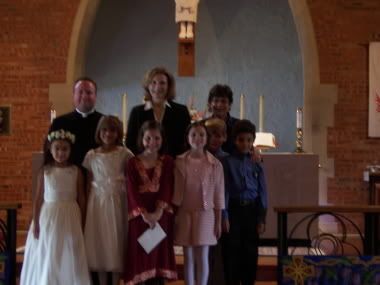
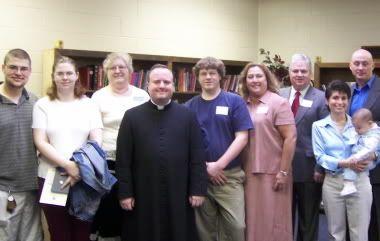
Here is our first Communion class at St Alban's. They graduated and made their first Communions yesterday.

Wednesday, November 14, 2007

The stewardship of our faith

A sermon for Yr C, Proper 27, given at St Alban's on November 11, 2007.

With our capital campaign and annual stewardship pledging in recent weeks, we’ve had a number of Sunday messages on our time, talent, and treasure. Today, I’d like us to give some thought to the stewardship of one of our greatest treasures—the Catholic Faith.

St Paul wrote to the church in Thessolonica, “Brethren, stand firm and hold fast to the traditions that you were taught by us, either by our spoken word or by our written letter” (2 Thess 2:15). The traditions of which the apostle writes, designate the whole body of teaching, (both doctrine and practice) that Paul received and handed over to the Thessalonians. Indeed, tradition means “that which is handed over.” And the Apostle Paul faithfully did so, through both scriptural and verbal instruction.

What he “handed over” was the same as what he had “received.” Paul points to that procedure in describing the Lord’s Supper , “I received from the Lord what I also handed over to you . . .” (1 Cor 11:23). Likewise, in his first letter to the Corinthians, Paul again uses that formula before reciting an early creedal statement, “I delivered to you as of first importance what I also received” (1 Cor 15:3).

We are to receive the tradition, stand firm and hold fast to the tradition, and ultimately hand over the tradition—whole, intact, undiluted, unchanged—so that the next generation can receive the same truth of the gospel that we have. Paul’s words to St Timothy are just as applicable to us: “Watch your life and doctrine closely: keep doing this, for by doing so, you save both yourself and those who listen to you” (1 Tim 4:16).

Those in the church who are entrusted with that responsibility above all are naturally the bishops—the successors to the apostles and "overseers" of local congregations. And so, in describing the duties of the bishop in his letter to Titus, Paul wrote, “He must hold firmly to the trustworthy message as it has been taught, so that he can encourage others by sound doctrine and refute those who oppose it” (Titus 1:9).

In the liturgy for the consecration of a new bishop in the Prayer Book, the first item on the list of episcopal duties is that the bishop is called to “guard the faith” (p 517). When the time comes to recite the Nicene Creed, the chief consecrator of the new bishop says “We call upon you, chosen to be a guardian of the Church’s faith, to lead us in confessing that faith” (p 519). But of course, in all these things, the bishop sets the example for all of us to follow—to preserve and cherish the Faith.

The Christian faith, like the Church, is “one, holy, catholic, and apostolic.”

It is holy
(or “set apart”) because it comes to us by divine revelation. It is holy because it is a gift from God, the fount of all holiness. It was not discovered or made up by human beings.

The faith is one and catholic (universal, or "according to the whole") because that is the nature of revealed truth. We do not get to pick and choose what doctrines we want to believe in like going through a line in a cafeteria and choosing what appeals to us. Our role is to receive God's revelation in its entirety, to affirm it as divine truth. To call the faith “catholic” is to say that the faith is not sectarian. That is, it is not the faith of Timothy Matkin or of St Alban’s, or of the diocese, or of Texas, or of America. It is the truth that God has revealed to all of us together.

The Anglican approach to revelation has always been mindful of this. As a former Archbishop of Canterbury, Geoffrey Fisher, stated so well: “We have no doctrine of our own. We only possess the Catholic doctrine of the Catholic Church, enshrined within the Catholic Creeds—and those Creeds we hold without addition or diminution. We stand firm on that rock.”

It is apostolic because it comes from the apostles (those sacred witnesses to the truth) and because it reaches out to the whole world through our gospel witness. Ironically, I think one of the best definitions of the catholic and apostolic faith is the motto associated with the Dr Vernon McGee and the Southern Baptists: “The whole Word for the whole world.”

Today, I want to encourage you to: Know the faith, Keep the faith, Share the faith.

First, know the faith. After all, you cannot defend it or share it, if you do not first know the faith. Knowledge about God is not infused supernaturally. That means it requires a commitment on your part. Each of us needs to take responsibility for our own formation.

That means coming to church every Sunday. It means following the scripture lessons and paying attention to the prayers. It means renewing your mind through Sunday School or Bible study. Consider reading a book on some matter of Christian teaching. Learn how to use resources (there are so many online). Freshen up on the basics—from time to time, look through the catechism in the Book of Common Prayer (pp 845-862) called "An Outline of the Faith." It is an excellent summary of the basics of Christian belief.

Can you give an accurate definition of the Trinity? Can you recognize misconceptions about the nature of the Godhead? Can you explain the relation of the human and divine in Jesus? Can you show the importance of the Mother of God and the saints? Can you tell someone how salvation works and why it’s needed? If you answered “No” to any of these questions, it is time to find the answers for yourself.

Being Catholics is not just about belonging to a Catholic Church like this one. It is also about knowing and living the Catholic faith that we have received from Jesus through the apostles. Ignatius, the bishop who succeeded the Apostle Peter at Antioch wrote: “Study, therefore, to be established in the doctrines of the Lord and the Apostles.”

Second, Keep the Faith. As the Apostle John wrote in his first letter, “Let that abide in you which you have heard from the beginning” (1 Jn 2:24). As the Apostle Paul wrote in his first letter to St Timothy (6:20), “Guard what was committed to your trust.”

By God’s grace, we have been entrusted with something truly precious. St Clement of Alexandria, writing in the second century, noted: “Now he is faithful, who keeps inviolably what is entrusted to him. And we are entrusted with the utterances concerning God and the divine words—the commandments.”

Are we going to be good stewards of the truths that God has entrusted to us? St Paul once noted, “the time will come when people will not put up with sound doctrine. Instead, to suit their own desires, they will gather around them a great number of teachers to say what their itching ears want to hear” (2 Tim 4:3). He was probably referring to the last days. But the reality is that we encounter the same problem in every age—it’s just a part of human nature. We face the problems of deceptive teachers and of self-deception. We also face the problem of ignorance—just not knowing better.

Strange ideas creep in from all over the place, and we need to counter-act that. How many people think they are going to turn into angels when they die because they saw It’s a Wonderful Life on TV last Christmas and just don't know any better? Biblically, nothing could be further from the truth.

We also have the problem of cultural ideas causing confusion about our faith. For example, if the gospel comes into a new culture that has a background of ancestor worship, our doctrine about the veneration of saints may be distorted. People think, This is just like what we used to do. Yet, ancestor worship is idolatry—a great sin. We dare not confuse the two.

Sometimes I’ve encountered confusion with non-Catholic Christian traditions. Perhaps they come from a tradition where infants are not baptized, but their previous church had "baby dedications" instead. So when they see a baptism here, it is sometimes interpreted in light of what they were familiar with in the past--a "baby dedication." So they won’t fully come to understand what baptism is because it has become confused with something entirely different.

In English churches of the Carolinian period, it was common to find the Apostles’ Creed and the Ten Commandments on large plaques above the altar, with a painting from the life of Christ in the center. Just last week I saw a photo of a church convention where displayed behind the altar were the Millennium Development Goals (which are all nice and good).
Photo Sharing and Video Hosting at Photobucket
But we should not let them be confused with God’s commandments nor with the church’s mission, which as the Prayer Book states so well, is: “. . . to restore all people to unity with God and each other in Christ.” We need to embrace the faith fully—know it inside and out. And we need to know it so well that we instantly recognize a counterfeit.


Third, let us never forget our obligation to Share the Faith. As the saying goes, Christianity is always only one lifetime away from dying out. In Jude 3, the apostle wrote, “Contend earnestly for the Faith, which was once-for-all delivered to the saints.”

We need to share the faith with our children—no one will do it for us. Let them hear about it in church and in Sunday School. But more importantly, let them hear it from your own lips and let them see it in the way you live your daily lives.

Priesthood really comes out of fatherhood (it’s fatherhood on a community scale). Dads, don’t forget it is your responsibility to bless you children, to lead your family in prayer, to make sure that the truth is told, and to bring your family to the larger family gathering on Sunday. Moms, no one will ever have as strong an impact on your children as you do. Remember to nurture the faith, hope, and love that God has given them. Support them in prayer as Monnica did for her son, St Augustine. The family truly is “the domestic church” as it is commonly called.

The living out of our faith at home needs to be spread outside the home. We each need to be both willing and prepare to share it with others. Jesus said, “Go make disciples of all nations, baptize them . . . and teach them to observe my commandments” (Mt 28:19-20).

Be friends to your neighbors, and be a neighbor to all those around you. Let the feel the love of God in your deeds. Let them see the light of Christ in your hearts. Let the hear the message of the gospel from your lips. Know the faith, keep the faith, and share the faith. As St Peter wrote, “In your hearts set apart Christ as Lord. Always be prepared to give an answer to everyone who asks you to give the reason for the hope that you have. But do this with gentleness and respect” (1 Pet 3:15).

Tuesday, November 13, 2007

Saying goodbye to an old friend

Photo Sharing and Video Hosting at Photobucket
This was one of the first images I put on my blog, back in the spring of 2005. On the left is Ruby and on the right is Tobi.

Ruby passed away not too long after that, and Tobi just died late Sunday night.

Tobi was a very special bunny for Melisa and I, an old friend whom we miss, especially since he was connected to our relationship. He lived a pretty full life for that breed of rabbit (and outlived two girlfriends we got for him). We took him home nearly eight years ago in Waco, just after I had started seminary. We joked that he was our first-born son. We named him Tobit after the character in the Bible, and we had the reading from Tobit at our wedding.
Photo Sharing and Video Hosting at Photobucket
He was very mild natured and had a gentle disposition (rabbits CAN be fussy, believe it or not). I know he gave great comfort to Melisa while I was away at school for so long. His presence was always comforting, like he was looking out for us. His moments of play and rambunctiousness were always entertaining. And like life itself, Tobi was simply beautiful.
Photo Sharing and Video Hosting at Photobucket

Thursday, November 08, 2007

This is one of my favorite movies


The song toward the end of the movie trailer is the touching hymn "Jisas yu holem hand blong mi" (which I think translates "Jesus, you hold my hand") sung by the choir of All Saints' Anglican Parish, Honiara, on Guadalcanal in the Solomon Islands.

Thursday, November 01, 2007

My saintly patrons

This All Saints' Day, I'm focusing on those saints who are related to me in some fashion--patrons, you might say.

St Timothy—my Christian name. Timothy was a young Greek with a Jewish mother. He became a companion of St Paul and remained at Ephesus as its first bishop. Two letters of the New Testament are addressed to Timothy, delivering instruction and encouragement to this young bishop.

St Anselm—his feast is on April 21, my birthday. He became Archbishop of Canterbury in 1093, and his greatest talents were as a theologian and a spiritual director. His spirituality is summarized by the phrase "faith seeking understanding." He pioneered the scholastic method and expounded the ontological argument for the existence of God. Anselm's most significant contribution to theology was the "satisfaction theory" of the atonement.

St Louis IX, King of France—his feast is August 25, the anniversary of my baptism. Louis was a model of integrity for political leaders. He was determined to live a life of Franciscan poverty and self-denial in the midst of worldly power and splendor.

St Anacletus—his feast is April 17, the anniversary of my confirmation. Anacletus (often just "Cletus" was Bishop of Rome from AD 76-88, although there is some discrepancy about exactly when he reigned as pope. We don't know much about his life either. All we are told in the historical record was that he ordained some priests and died as a martyr.

St Julian of Antioch—his feast day is March 16, the anniversary of my ordination to the diaconate. This Roman senator was martyred on that day in the Diocletian persecution, about the year 305. His legend states that he was subjected to terrible tortures and paraded daily for a whole year through various cities of Cilicia. He was then sewn up in a sack half-filled with scorpions, sand, and vipers, and cast into the sea. The sea carried his body to Alexandria, and was buried there before being moved to Antioch.

St Bede the Venerable—his feast is May 25, the anniversary of my wedding. The Venerable Bede kept the light of knowledge and scholarship burning in the Dark Ages at his monastery at Jarrow. He also wrote The Ecclesiastical History of the English People.

St Linus—his feast is September 23, the anniversary of my ordination to the priesthood. Not much is known about this successor to St Peter in Rome. He is said to have reigned as Pope from AD 67 until (he was perhaps martyred) in 76. Those were big shoes to fill, but Linus seems to have pulled it off. The people no doubt chose him because of his tender pastoral heart and holiness of life. He may be the Linus mentioned in passing in 2 Timothy 4:21.